You iced it. You rested it. You backed off the activity that set it off. Six weeks later, that shoulder, elbow, wrist, or heel still barks every time you grip, lift, or push off. Tendon pain that should have faded by now keeps flaring, and nothing you try seems to change the pattern.
Metro Acute Chiropractic sees this exact story often, because a tendon that stops healing is rarely a rest problem. It is usually a tissue problem, a load problem, or a movement problem hiding underneath. Looking at how you move, not just where it hurts, is what changes the outcome.
Keep reading to find out how tendonitis and tendonosis differ, why that difference changes your entire treatment plan, and what actually rebuilds a tendon that has stalled. Lasting relief means the tendon gets stronger, not just quieter.
What Your Pain Pattern May Be Telling You
Two very different tendon conditions cause nearly identical pain. One involves acute inflammation. The other involves quiet tendon degeneration, and it doesn’t respond to the same care.
Acute Inflammation in Tendonitis
Tendonitis, also spelled tendinitis, is short-term inflammation inside a tendon. It usually follows a sudden spike in activity, a new workout, a long weekend of yard work, or a direct hit to the area.
The pain shows up fast and feels sharp. The tissue is irritated and reacting, so calming that reaction early often works well.
Chronic Collagen Breakdown in Tendonosis
Tendonosis, or tendinosis, is different. Here the collagen fibers inside the tendon have broken down and lost their tight, parallel structure. Collagen breakdown leaves the tendon thicker in spots, weaker overall, and slower to tolerate load.
There is little or no active inflammation in true tendon degeneration. That single fact explains why anti-inflammatory approaches often do nothing for stubborn cases. The tendon is not inflamed. It stalled mid-repair.
Tendinopathy, Tenosynovitis, and Other Similar Terms
Tendinopathy is the umbrella label for tendon conditions in general, used when the exact tissue state is not yet clear. Your provider may start there, then narrow it down.
Tenosynovitis and synovitis involve the sheath and lining around the tendon rather than the tendon body. De Quervain’s tenosynovitis on the thumb side of the wrist is a familiar example. Naming the right tissue matters, and so does reading the symptoms it produces.
Symptoms, Locations, and Warning Signs
Your symptoms carry real diagnostic clues. How the pain behaves through the day often separates inflammation from long-term tendon damage.
Warm, Swollen Pain Versus Stiff, Lingering Pain
Acute tendonitis tends to bring swelling, warmth, sometimes redness, and pain that spikes with movement right after a strain. It feels angry and recent.
Tendinosis symptoms feel different. Expect morning stiffness, an ache that eases as you warm up, then returns hours later or the next day. You may feel a thickened spot or notice the area gives out under load. Strength quietly fades because micro-tears never fully rebuild.
Common Trouble Spots From the Shoulder to the Heel
Tendon problems favor high-mileage areas:
- Achilles tendon, especially in runners and people who ramped up hills or speed
- Rotator cuff, from overhead lifting, painting, or throwing
- Tennis elbow on the outer elbow, from gripping, typing, and tool use
- Patellar tendon below the kneecap, from jumping and squatting
- Wrist and thumb tendons, from repetitive typing, lifting, or infant care
Sports injuries often put athletes here, but so do desk jobs and trades.
When Sudden Pain May Signal a Rupture
A weakened tendon can fail. If you feel a pop or snap, lose the ability to push off, raise your arm, or bear weight, treat that as urgent care, not a wait-and-see situation. Tendon rupture needs prompt evaluation.
Short of that, the harder question is why a tendon quits healing in the first place.
Why a Tendon Can Stop Healing on Its Own
Tendons repair slowly because they have limited blood supply. When damage keeps outpacing repair, the tissue never catches up.
Repeated Stress Without Enough Recovery
Repetitive strain is the usual culprit. The same swing, lift, keystroke, or stride, thousands of times, with too little recovery between sessions.
Each repetition creates small amounts of tendon damage that healthy tissue normally rebuilds overnight. Stack too many days without that rebuild window, and you get chronic pain instead of adaptation. Activity modification matters as much as treatment here.
Movement and Health Factors That Raise Risk
Biomechanics play a large role. A stiff ankle changes Achilles load. A restricted mid-back forces the rotator cuff to work at a bad angle. Weightlifting with a form flaw concentrates stress on one tendon insertion.
Health factors add up too. Aging reduces collagen production. Trauma, osteoarthritis, obesity, and type 2 diabetes all slow tendon healing. Certain medications, including fluoroquinolone antibiotics and repeated corticosteroids, are associated with weaker tendon tissue.
The FDA carries a boxed warning on fluoroquinolone antibiotics specifically for tendinitis and tendon rupture, its most serious safety label, so it’s worth mentioning any recent course of these to a provider if a tendon problem shows up.
Why Rest Alone Can Leave Capacity Behind
Rest lowers pain. It does not rebuild collagen or restore strength.
Come back to your old activity level after six quiet weeks, and the tendon meets the same demand with less capacity than before. That is why so many people flare within days of returning. Sorting inflammation from degeneration before choosing care prevents that loop.
Getting the Right Diagnosis Before Choosing Care
The right plan depends on which problem you actually have. That starts with hands-on assessment, not assumptions.
What a Physical Examination Can Reveal
A thorough physical examination locates the exact tender point, checks range of motion, and tests strength under load. Loading the tendon on purpose tells us a lot. Pain that appears only under resistance points somewhere different than pain present at rest.
Movement screening matters just as much. Watching how your hip, ankle, shoulder blade, or wrist behaves during real motion often reveals the strain source upstream from the sore spot.
When Ultrasound or MRI Adds Useful Detail
If the picture stays unclear or recovery stalls, imaging helps. Ultrasound shows tendon thickening, disorganized fibers, and fluid in real time while you move. MRI provides detailed soft-tissue views for complex cases or suspected tears.
Referral to orthopedics or sports medicine makes sense when imaging suggests a significant tear or when conservative care plateaus.
Medication and Injection Decisions Need Context
NSAIDs such as ibuprofen and naproxen can help genuine acute inflammation for a short stretch. Anti-inflammatory treatment does far less for degeneration, because there is little inflammation to reduce.
Corticosteroid injections may quiet pain temporarily, though repeated use raises concerns about tendon quality. Knowing which condition you have keeps you from spending months on the wrong tool. Then the real work begins: rebuilding capacity.
Rebuilding Tendon Strength With a Personalized Plan
Tendinosis treatment is a rebuilding project. The goal is stronger, better-organized tissue that tolerates the loads your life demands.
Relative Rest, Support, and Pain-Calming Measures
Relative rest means reducing the aggravating load without shutting the tendon down. Bracing, taping, or a short-term splint can offload the area during flare-ups. Massage helps surrounding muscles that have tightened in compensation.
Nutrition supports repair too. Adequate protein and vitamin C contribute to collagen production. These steps calm things down, but they do not rebuild strength.
Progressive Loading and Eccentric Exercise
Progressive loading is central to recovery. You give the tendon controlled, gradually increasing work so it lays down organized collagen again.
Eccentric exercise, slowly lowering under load, has strong support for Achilles and elbow tendons. Strength training and targeted stretching round out the plan. Physical therapy style programming, done consistently for weeks, beats any passive treatment alone. Platelet-rich plasma and other regenerative support are options in select cases; surgery stays a last resort.
How Stemwave Therapy May Support Stalled Repair
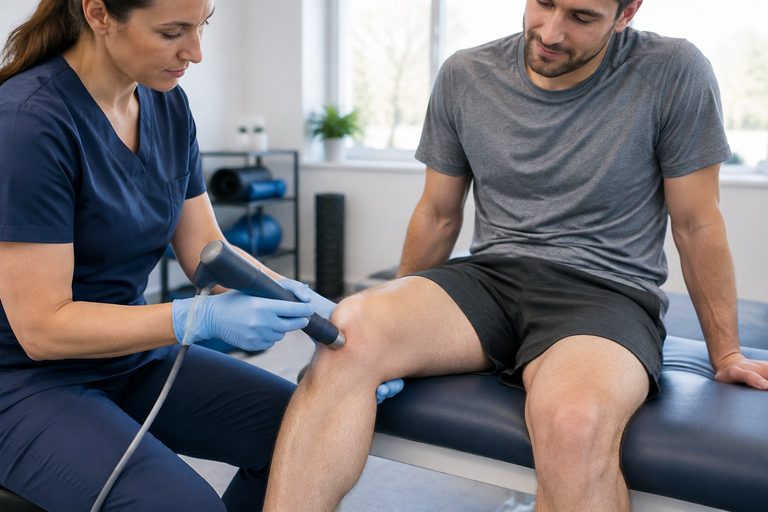
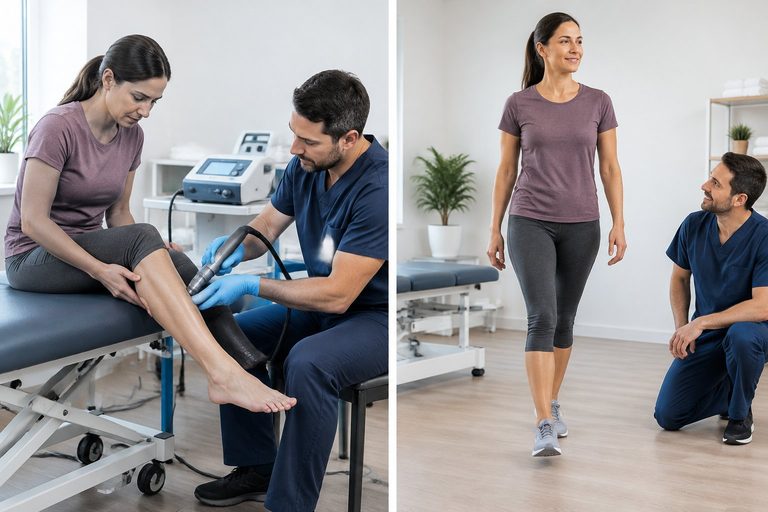
For tendons stuck in that stalled cycle, Stemwave therapy adds something loading alone cannot. A handpiece delivers focused acoustic waves into the tendon. You feel a firm tapping sensation, no needles, no numbing, and you walk out and go about your day.
Those waves increase local blood flow and stimulate the cellular repair response in tissue that quit healing. That addresses the root problem in tendonosis. Paired with chiropractic care that corrects the biomechanics feeding the strain, it targets both the damaged tissue and the reason it kept getting damaged.
Move Forward Without Guessing at the Cause
A tendon injury heals best when your return to activity is planned, not improvised. Guessing can turn a six-week problem into a two-year one.
Returning to Work, Training, and Daily Movement Safely
Return by load, not by calendar. Rebuild grip, push, or push-off strength on the injured side before you match your old volume. Athletes should restore full range and single-limb strength before speed work.
Activity modification bridges the gap. Change tool grips, adjust desk height, swap running surfaces, or split heavy days into shorter blocks. Fixing biomechanics helps keep tendon pain from returning once it fades.
When to Request a Tendon Evaluation
Get evaluated if pain has lasted more than a few weeks, keeps returning with activity, or has started limiting work, sleep, or training. Also seek care if strength has dropped or the area feels thickened. Early clarity shortens the road for both tendonitis and tendonosis.
Frequently Asked Questions
How Can I Tell Whether My Tendon Pain Is From Inflammation or Long-Term Tendon Damage?
Recent, sharp pain with swelling and warmth points toward inflammation. Pain lasting more than six weeks, with morning stiffness and weakness but little swelling, suggests degeneration. A hands-on exam with load testing confirms which one you have.
Which Symptoms Suggest My Tendon Problem Has Become More Chronic?
Watch for stiffness that eases as you warm up, then returns later, plus a thickened spot on the tendon and reduced strength. Repeated flare-ups every time you resume activity are another strong clue.
Can an Untreated Tendon Injury Progress Into a Longer-Lasting Condition?
Yes. Repeated strain without full recovery lets micro-tears accumulate, and collagen fibers stay disorganized. That is how a short-term irritation becomes tendonosis, and a weakened tendon also carries a higher rupture risk.
What Treatment Helps Restore Strength and Reduce Pain in a Damaged Tendon?
Progressive loading with eccentric exercise is the foundation, supported by relative rest, taping or bracing during flares, and correcting the movement pattern causing the strain. Stemwave therapy can help restart repair in stalled tendons.
Is Long-Term Tendon Degeneration Permanent, or Can It Heal With the Right Care?
Tendons can remodel and regain strength, though it takes months, not weeks. Consistent loading plus treatment that stimulates blood flow and collagen production gives the tissue what it needs to rebuild.
How Do Imaging Tests Such as Ultrasound Help Identify the Cause of Tendon Pain?
Ultrasound shows tendon thickening, disorganized fibers, and fluid as you move the joint, helping separate inflammation from degeneration. MRI adds detail when a tear is suspected or recovery has plateaued.
Stop Managing Tendon Pain and Start Rebuilding the Tendon
The practical takeaway is straightforward. If rest and ice have not worked, you are likely dealing with tendon degeneration rather than inflammation, and that condition needs loading and repair stimulus instead of more waiting.
Tendon pain that lingers for months chips away at work, training, and sleep. It does not have to be something you simply manage. With over 16 years of experience and thousands of patients treated, our team in Lone Tree looks at the tendon and the movement pattern behind it.
Take the first step toward lasting relief. Schedule your visit with our team in Lone Tree and find out what personalized care can do for you.