The quickest way to loosen tight hip flexors is a gentle half-kneeling stretch paired with glute and core strengthening, plus short walks that break up long stretches of sitting. Stretching alone feels good for an hour. Building strength in the muscles that oppose your hip flexors is what makes the change stick.
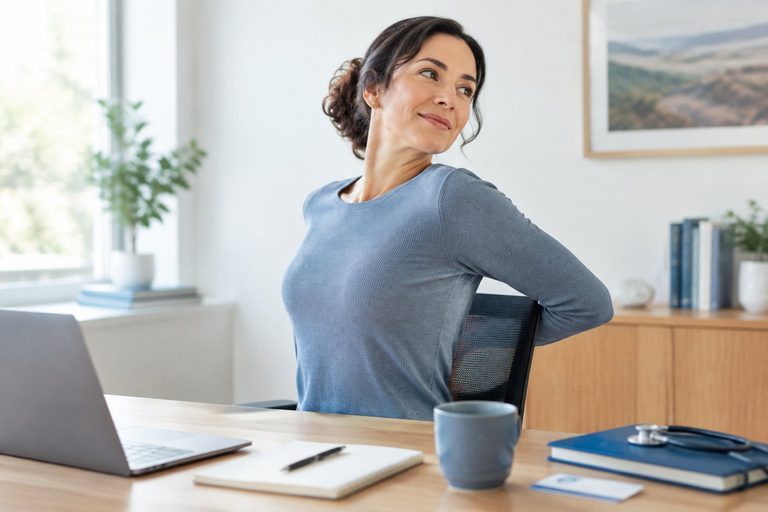
The muscles at the front of your hip stay folded every time you sit, drive or pedal. Over months, that shortened position becomes your body’s new normal, and you feel it as a pull at the front of the hip when you stand, stiff first steps, or a lower back that aches by the end of the day.
Which Muscles Are We Talking About?
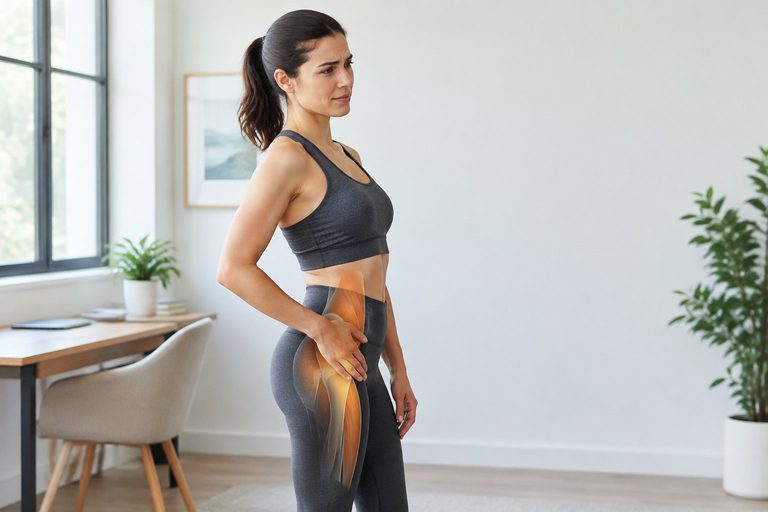
Your hip flexors lift your knee and bend you at the waist. The biggest is the iliopsoas, made up of the psoas, which starts on the sides of your lower spine, and the iliacus, which lines the inside of the pelvis. Both attach to the top of your thigh bone. The rectus femoris (the quad muscle that crosses both hip and knee), the tensor fasciae latae on the outer front of the hip and the long, thin sartorius all help. Because the psoas attaches straight to the spine, tightness there often shows up as back discomfort.
Why Do They Get Tight?
Sitting
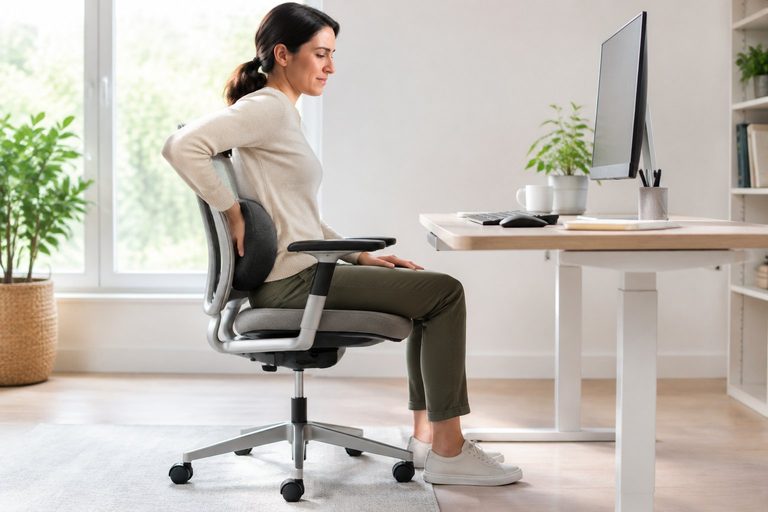
Long hours in a chair keep the hip flexors short. The tissue adapts to that length, so moving your leg fully behind you starts to feel restricted. Many people notice it most on the drive home after a full day at a desk.
Running and Cycling
Active people are not immune. Cyclists stay bent forward the whole ride, and runners with weak glutes rely on their hip flexors to pull each leg forward, overworking them. Front Range runners and riders often feel tighter after big training weeks.
Weak Glutes and Core
When the glutes and abs are not pulling their weight, the front of the hip tightens to compensate. That imbalance is a key reason stretching alone rarely solves the problem.
How Tight Hips Affect Your Back and Knees
Short hip flexors tug the front of the pelvis down into an anterior tilt, which increases the arch in your lower back and loads the small joints there. You may feel it as a dull ache when standing or walking, and it often overlaps with lower back stiffness in the morning. A tight rectus femoris also pulls on the kneecap, which can add to knee pain on stairs or squats.
A Quick Home Check
Lie on your back at the edge of a sturdy bed. Hug one knee to your chest and let the other leg hang. If the hanging thigh cannot rest flat, the hip flexors on that side are likely tight. If the knee also straightens as the thigh drops, the rectus femoris is probably involved. A big difference between sides, or pain during the test, is a good reason to get assessed.
Stretches to Try First
Half-Kneeling Hip Flexor Stretch
Kneel on your right knee with a towel underneath and your left foot flat in front. Stand tall, squeeze your right glute and gently tuck your tailbone under. You may already feel the stretch; if not, shift your hips forward an inch or two while staying upright. The most common mistake is arching the lower back to go deeper, which takes the stretch off the muscle you want. Hold 30 to 45 seconds, two to three times per side.
Gentler Options
If kneeling hurts, try the same stretch standing in a split stance while holding a counter. Lying on your back near the edge of a bed with one knee hugged in is gentler still and keeps your back supported.
Couch Stretch for Later
Once the basic stretch feels easy, the couch stretch (back shin resting up against a couch or wall) loads the rectus femoris more heavily. Save it for a few weeks in, and skip it if it pinches the front of the hip or hurts the knee.
Strength Work That Makes It Last
- Glute bridges: press through your heels and lift your hips until your body forms a line from knees to shoulders. Squeeze for two seconds at the top. Start with two sets of 10 to 12, then progress to single-leg bridges.
- Dead bugs: on your back with arms up and knees bent at 90 degrees, press your lower back gently into the floor and slowly lower opposite arm and leg.
- Reverse lunges: step back, lower until both knees bend to about 90 degrees and squeeze the back glute at the bottom.
- Movement breaks: a short walk every 30 to 60 minutes moves your hips through extension many times and stops the tightness rebuilding.
Our stretching and strengthening programs build these in stages and check your form as you progress.
Stretching every day and still tight? That usually means something else is holding your hips back. Dr. Jacob Alvis checks your pelvis, lower back and glute strength to find the real reason your hip flexors won’t let go, then shows you how to fix it. Call (303) 221-3342 or request an appointment online.
When to Get It Checked
Plain stiffness should ease within a few weeks of steady work. Sharp pain when you lift your knee, a deep pinch in the groin when you squat, a painful snapping hip, or pain that wakes you at night points to more than tight muscle. Pain traveling down the leg with tingling also needs a look.
Seek emergency care for loss of bladder or bowel control, numbness in the groin, sudden severe leg weakness, fever with hip or back pain, or calf swelling and warmth with leg pain.
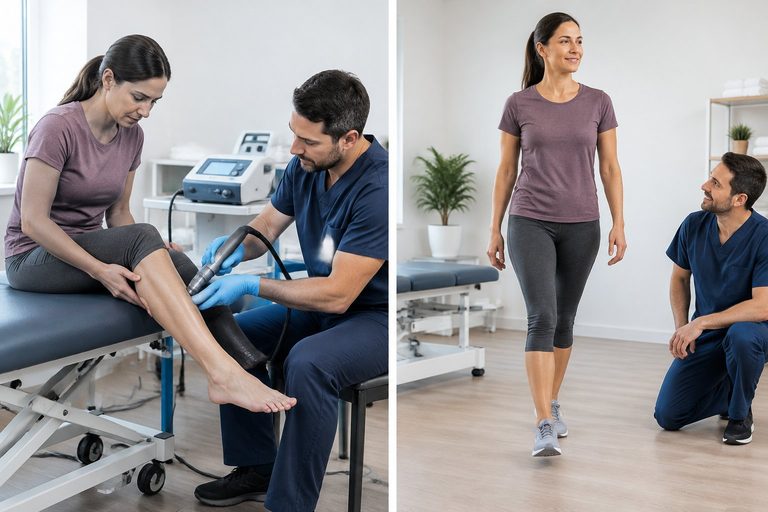
If daily stretching has stalled, an exam can show whether a stiff pelvis, an irritated lower back or weak glutes are keeping the front of the hip on guard. Gentle adjustments improve motion in a stiff lower back and pelvis, while massage and myofascial release work on the iliacus, quads and surrounding tissue with more precision than a foam roller.
Imagine standing up from your desk or climbing off the bike without that pull at the front of your hips. Runners, riders and desk workers in Lone Tree have relied on our team for more than 16 years, and Dr. Alvis can show you whether your hips need more length, more strength or both. Call (303) 221-3342 or request an appointment online.
Frequently Asked Questions
Will walking loosen tight hip flexors?
Regular walking helps, because each stride moves the hip into extension, the opposite of sitting. For long-standing tightness, add stretches and glute strengthening for results that last.
Can hip flexors feel tight when they are actually weak?
Yes. Weak muscles often stay tense to protect the area, so stretching gives only brief relief. Strength work for the glutes, core and hip flexors themselves usually helps the tight feeling fade.
How long does it take to improve?
Most people notice easier movement within two to four weeks of daily stretching and regular strength work. Tightness built over years of desk work can take two to three months to change fully.