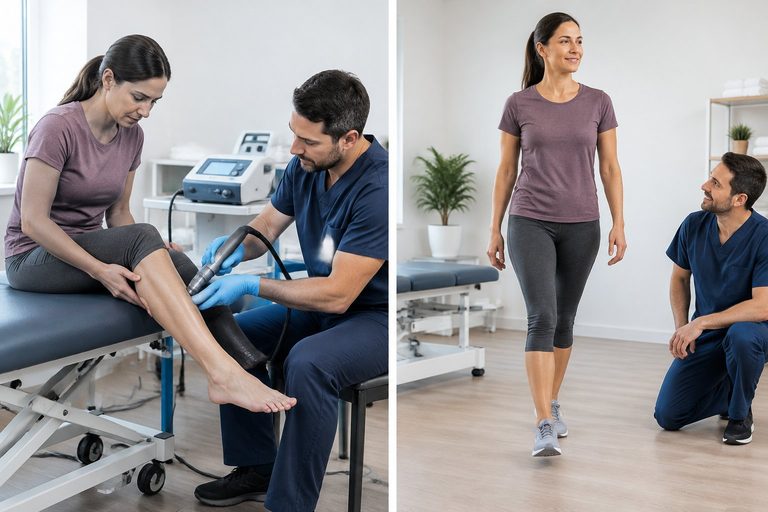
Most people feel little change right after a shockwave session, some soreness for a day or two, early gains in daily movement around weeks 2 to 4, and the clearest progress between weeks 6 and 12 as the tissue repairs. That shockwave therapy before and after timeline surprises a lot of patients. They expect the session itself to be the turning point, but the real shift happens in the weeks that follow.
Shockwave gives tendons and soft tissue that have stalled a strong signal to start repairing again, and your body does the actual rebuilding. That is why your “before and after” unfolds over a couple of months rather than one appointment. Knowing what each stage looks like helps you spot real progress, avoid giving up too early, and judge results by how you move rather than how one particular day feels.
The Timeline, Stage by Stage
During the Session
Gel goes on the skin and a handheld applicator delivers rapid pulses to the sore area for a few minutes. It feels like firm tapping, strongest over the most damaged tissue, a bit like pressure on a bruise. The intensity is adjusted to what you can comfortably handle and the discomfort fades as soon as the device stops.
The First 48 Hours
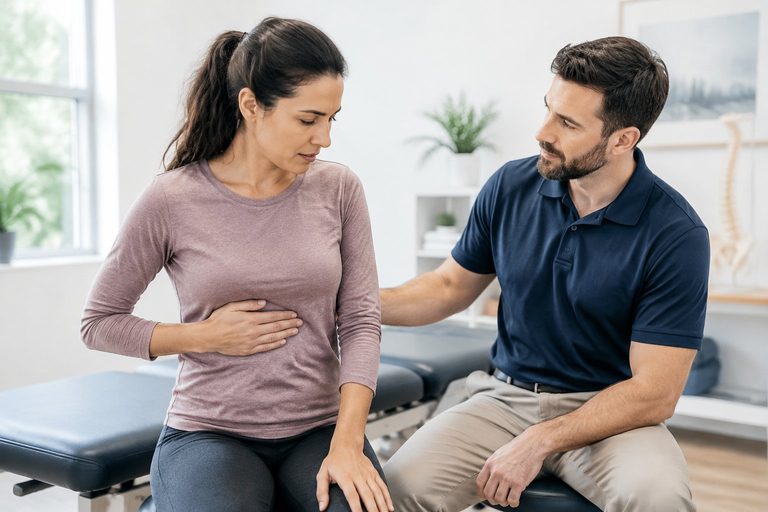
Mild soreness, warmth or redness in the treated area is common and expected. It is part of the repair response the treatment sets off. Some people feel looser right away, others feel a bit worse before they feel better, and both are normal. Light walking and everyday tasks are fine; hard workouts on the area can wait a couple of days.
Weeks 2 to 4
This is when small wins usually appear in ordinary tasks. The first steps out of bed hurt less, gripping a coffee mug stings less, stairs feel smoother. These changes come from improved blood flow and calmer pain signals in the tissue. It is also a great window to build strength, because exercises that hurt before often become tolerable now.
Weeks 6 to 12 and Beyond
By now, new collagen and new small blood vessels have had time to mature, and the tissue becomes stronger and more organized. This is the best point to judge lasting results, which is why research on chronic tendon problems commonly checks outcomes at the 12-week mark. Healing often keeps going for months after your last session, especially if you stay on your strength plan.
How to Measure Your Own “Before and After”
Photos rarely show tendon healing, so the most honest picture comes from a few simple measures recorded at your first visit and checked as you go.
Pain Scores at the Same Moments
Rate your pain from 0 to 10 at rest, first thing in the morning and during the activity that bothers you most. Rate the same moments each week. A drop from 6 to 3 on your morning steps means something specific; a single score after a long day can mislead you.
Range of Motion and Function
Your provider may measure how high you can lift your arm, how far your ankle bends or how deep you can squat without pain. Function tests add another layer: how long you can stand, how many stairs you can climb or whether you can carry groceries without your elbow flaring.
One or Two Activity Goals
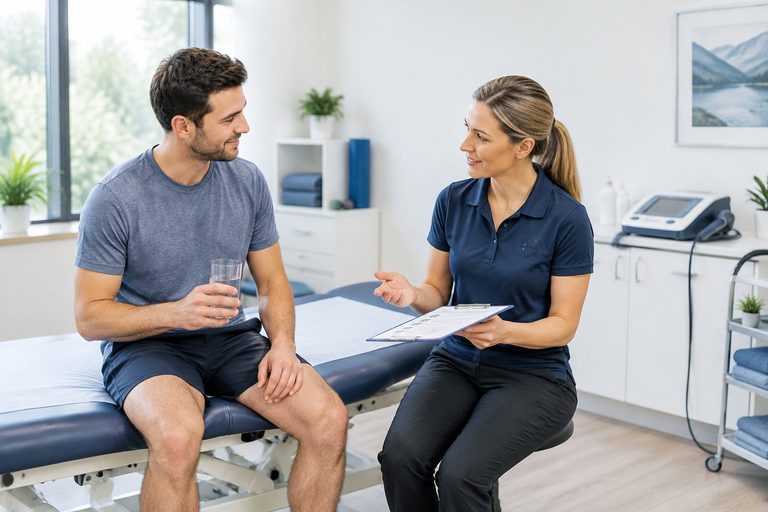
Pick goals that matter to you, like running three miles, playing a full round of golf or sleeping on your sore shoulder. We write these down at the start and check them at each visit. When a goal that felt out of reach becomes routine, that is a result you can trust. If you are new to us, our what to expect page explains how a first assessment works.
Looking forward to your own before and after? Your first visit includes a check on whether StemWave focused shockwave suits your tissue, plus the starting measures we will use to track your progress. Call (303) 221-3342 or request an appointment online.
Why Results Vary From Person to Person
The Diagnosis and How Long You Have Had It
Shockwave has its strongest support for chronic plantar fasciitis, Achilles and patellar tendon problems, tennis elbow and calcific shoulder tendinitis. Pain that is nerve-related, or a fresh injury that is still inflamed, responds differently. Problems that have lasted years generally take longer than ones that started a few months ago.
The Device and the Plan
Device and dosing play a part too. We use StemWave, a focused device that can be aimed at deeper tissue, and you can read more about it on our StemWave therapy in Lone Tree page. Spacing, energy and accurate targeting all shape the outcome.
The Rehab You Do
Rehab makes the biggest difference to whether gains hold. Shockwave restarts repair, and progressive strengthening rebuilds the tissue’s ability to handle load. For athletes, pairing treatment with athletic recovery therapy helps you return to training without overloading the area too soon.
When Progress Stalls
If your pain scores and function have not changed after a full course, it is time for a reassessment. The driver may sit elsewhere, such as a stiff joint above the sore spot or foot mechanics loading the knee. Soreness lasting more than a few days after a session also deserves a call. Seek medical care urgently for spreading redness and heat with fever near a treated area, sudden severe weakness or chest pain.
There is nothing better than watching a patient reach a goal that felt out of reach on day one. Dr. Alvis will find the root cause of your pain and set up a plan with clear, measurable goals, so you can see your own before and after in numbers rather than guesses. Metro Acute Chiropractic has been helping people in Lone Tree reach goals like these for more than 16 years, at our office at 9898 Rosemont Ave. Call (303) 221-3342 or request an appointment online.
Frequently Asked Questions
Can shockwave work if I feel nothing after the first session?
Yes. The repair response builds over weeks, so many patients feel little after the first one or two sessions and then notice easier movement around weeks 2 to 4.
Why am I sorer the day after treatment?
Extra soreness is a common sign the tissue is responding. It should ease within a day or two. Call your provider if it lasts longer or keeps getting worse.
How long can improvements last?
Months to years, when the tissue has healed well and you keep it strong. Ongoing strength work and sensible training habits protect the gains.