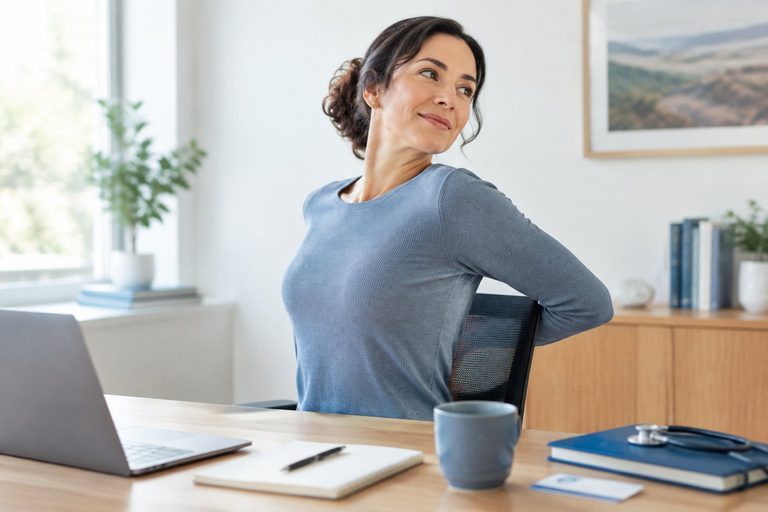
Lower back pain when sitting comes from extra load on the discs and muscles of your lower back, made worse by slouching, hours without moving, tight hip flexors and switched-off glutes. The fix that helps most people is a supported upright position, a short movement break every 30 minutes, and a few minutes a day of hip and glute work.
If your back feels fine on a morning walk but starts nagging an hour into a meeting or halfway through the drive home on C-470, you are in good company. Most of the causes can be changed at your desk and in your car starting today. Some sitting pain does come from an irritated disc or nerve, though, and knowing the difference tells you whether a better chair setup is enough or a professional assessment makes more sense.
Why Does Sitting Aggravate Your Lower Back?
More Pressure on the Discs
Your lower spine has five vertebrae with a cushion-like disc between each pair. Slumped sitting puts more pressure on those discs than standing does, because slumping rounds the lower back, flattens its natural curve and pushes even more load onto the front of the discs.
Tired Postural Muscles
The small muscles along your spine work nonstop to hold you upright, and without a change in position they tire out. That shows up as a dull ache that builds through the afternoon. Desk workers describe it the same way again and again: fine at 9 a.m., sore by 3 p.m.
Tight Hip Flexors, Lazy Glutes
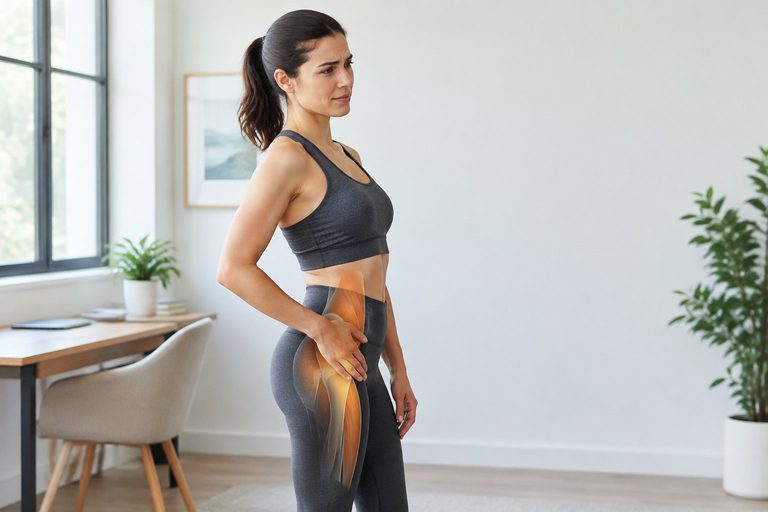
Your hip flexors stay shortened for hours and tug on the front of the lower spine when you stand, which is why the first few steps out of a chair feel stiff. Meanwhile the glutes sit unused, so your lower back muscles pick up work the glutes should be doing.
When It Might Be a Disc or Nerve
Pain that shoots into your buttock or down your leg while sitting points toward a nerve, often from a disc, since slouched sitting increases disc pressure. Burning, tingling or numbness down one leg are among the most common symptoms of sciatica. By contrast, spinal stenosis often feels better when you sit or lean forward. A useful clue: if slumping in a chair sends pain into your leg but a short walk eases it, a disc is a likely suspect, while legs that feel heavy on a walk and better once you sit fit stenosis. A hands-on exam confirms which pattern you have.
Set Up Your Desk and Car
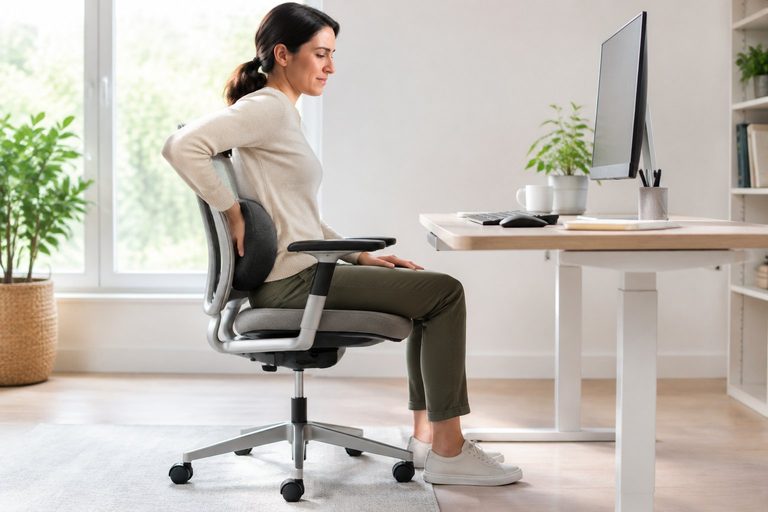
Your Chair
Sit with your hips all the way back, feet flat, knees level with or slightly below your hips, and a gentle inward curve in your lower back. Use the chair’s lumbar support or a small pillow at belt level. You should feel light contact in the small of your back without being pushed forward. Sit close enough to the desk that your elbows rest near your sides at about 90 degrees.
Your Screen
Set it so your eyes land near the center when you look straight ahead. A laptop flat on a desk sits too low and pulls your head forward, which also feeds text neck. A separate monitor or laptop stand fixes this.
Standing Desks and Breaks
Standing desks help most when you switch between sitting and standing through the day rather than standing for eight hours. The bigger win is movement: stand, stretch or walk for a minute or two at least every 30 minutes. A phone reminder makes the habit stick.
Your Car Seat
Move the seat close enough that your knees stay slightly bent with the pedals fully pressed, recline the backrest to just past upright, and use lumbar support or a rolled towel. Take your wallet out of your back pocket, since sitting on it tilts the pelvis. On longer drives up I-25 or into the mountains, stop every hour to walk around.
Exercises That Build Sitting Tolerance
- Kneeling hip flexor stretch: kneel on one knee, tuck your tailbone slightly and shift your hips forward until you feel a stretch at the front of the back hip. Hold 20 to 30 seconds, two to four times per side.
- Pelvic tilts: on your back with knees bent, gently flatten your lower back into the floor, hold five seconds, relax. Ten slow reps.
- Glute bridges: squeeze your glutes and lift your hips until shoulders, hips and knees form a line. Hold six seconds and repeat 8 to 12 times.
- Bird dogs: on hands and knees with a flat back, reach one arm forward, then one leg back, and later the opposite arm and leg together, keeping your hips level.
- Daily walks: 20 to 30 minutes most days brings blood flow to the spine and loosens stiff hips.
Stop any movement that causes sharp pain or sends symptoms down your leg.
Dreading the afternoon ache at your desk? Our Lone Tree team will look at how your hips, discs and back muscles handle a long day of sitting, then pair hands-on care with simple changes you can make at work. Call (303) 221-3342 or request an appointment online.
When to See a Professional
A few symptoms should skip the clinic entirely: if you lose bladder or bowel control, feel numb in the groin or inner thighs, or your legs suddenly turn weak, head straight to the emergency room. Seek prompt medical attention for back pain with fever, chest or belly pain, unexplained weight loss, a history of cancer, or pain after a fall or crash.
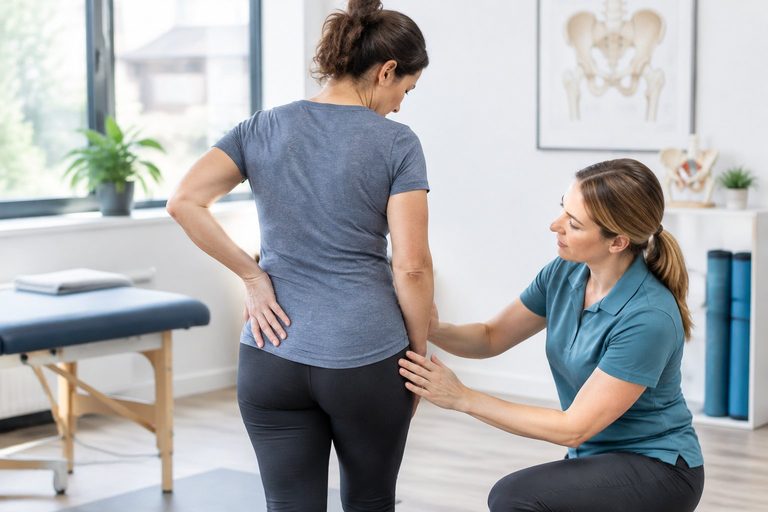
Book an assessment if your pain has not improved after about four weeks of self-care, is getting worse, spreads down your leg or keeps flaring every few months. Most back pain does not need an X-ray or MRI at first; a hands-on exam of how your spine and hips move, plus reflex and strength testing, usually points to the source.
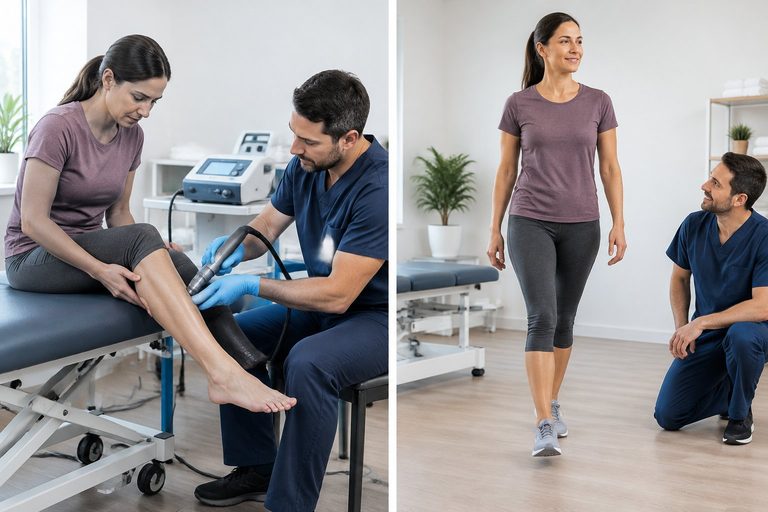
From there, adjustments restore motion to stiff joints in the lower back and pelvis, massage and myofascial release ease tight hip flexors and back muscles, and corrective exercise strengthens your glutes and core so your back can handle long days at the desk. Our back pain care brings these together into one plan.
Your workday should not end with a stiff, aching back! Our clinic has cared for desk workers and commuters from Lone Tree, Centennial and the Denver Tech Center for more than 16 years, and Dr. Alvis knows exactly how a long day in a chair loads the lower back. Our office at 9898 Rosemont Ave is an easy drive from the DTC, so call (303) 221-3342 or request an appointment online.
Frequently Asked Questions
Why does my lower back hurt when sitting but not standing?
Slouched sitting puts more pressure on the lumbar discs and rounds the lower back, while standing keeps the spine’s natural curve. If standing feels better, a disc may be sensitive, so change positions often and get checked if pain lasts weeks.
Why does sitting up very straight make my back hurt?
Forcing a rigid, arched posture tires your back muscles quickly. Sit back in the chair with lumbar support doing part of the work, and change positions often rather than holding one “perfect” posture.
What is the best sleeping position after a day of sitting?
On your back with a pillow under your knees, or on your side with a pillow between your knees to keep your hips level. Avoid stomach sleeping if it arches your lower back.