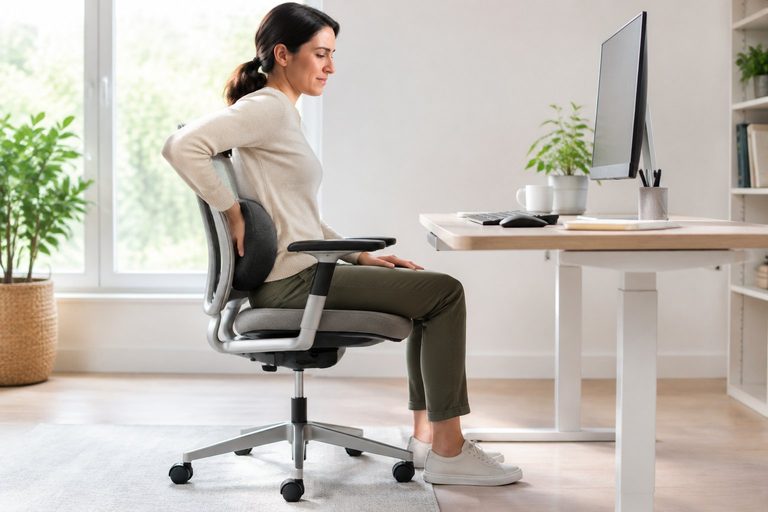
Your neck aches by mid-afternoon. Your shoulders feel tight and heavy after a long stretch of scrolling or staring at a laptop screen. You catch your reflection and notice your head sits forward instead of stacked over your shoulders, and it makes you wonder how long that has been happening without you noticing.
This pattern has a name, and it is showing up more in Lone Tree and across the Denver Tech Center as remote and hybrid work keep people locked into screens for hours at a stretch. A chiropractor Lone Tree residents trust for text neck can look past surface stiffness and find what is actually pulling your neck out of position. Metro Acute Chiropractic takes that root-cause approach, looking at how your whole spine, posture, and daily habits connect before building a plan around your body.
In this guide, you’ll discover what text neck is doing to your cervical spine, how to tell a bad workday from a real postural problem, and what actually helps it improve. Here is something worth hearing before your first visit: a stiff neck from one long day is different from a neck that has been drifting forward for months, and they need different plans.
What Text Neck Does to Your Cervical Spine
Text neck adds real mechanical stress to your neck every time your head drifts forward off your shoulders. Your spine is built to carry your head when it sits stacked and balanced, not when it juts forward toward a screen.
A 2014 biomechanical study modeled exactly how much extra force this adds. An adult head weighs 10 to 12 pounds in a neutral position, but as it tilts forward, the effective load on the cervical spine climbs sharply, reaching roughly 27 pounds at 15 degrees of tilt and as much as 60 pounds at 60 degrees, the posture common when looking down at a phone.
That extra load does not stay quiet. It can lead to muscle fatigue, joint irritation, and stiffness that can reach your shoulders and upper back.
Why Forward Head Position Puts More Load on the Neck
Your neck muscles were not built to hold your head several inches in front of your shoulders for hours at a time. When your head shifts forward, the small muscles at the base of your skull and the joints of your upper neck take on far more work than they were designed for.
Over weeks and months, that extra load can lead to:
- Chronic tightness at the base of the skull that feels like a constant dull ache
- Reduced ability to turn your head fully to one side without discomfort
- A visible forward head posture that shows up in photos or mirrors
- Joint irritation in the upper cervical spine (often around the C2 to C6 level)
None of this happens overnight. It builds the same way any repeated strain builds, one long day at a time.
How Screen Time Strains the Upper Back and Shoulder Muscles
Your upper back and shoulders work overtime to keep your head from tipping too far forward. The muscles between your shoulder blades, along with the upper trapezius, end up holding a static contraction for hours while you scroll, type, or read.
That static hold is why so many people describe a burning feeling between the shoulder blades by the end of the workday. It is not random. Those muscles fatigue from constant low-level tension without a break.
The longer this goes unaddressed, the more your body starts treating a forward head position as its resting posture, which changes how your next stretch or workday feels.
Is It a Temporary Stiff Neck or a Chronic Posture Problem?
A stiff neck from one long day at your desk usually eases up within a day or two of normal movement and rest. A postural pattern from text neck builds slowly and doesn’t fully resolve with a night’s sleep or a short stretch break.
A stiff neck is almost always temporary and responds to normal daily movement, according to information on stiff neck causes from the Cleveland Clinic. If your neck tightens after one long screen session and loosens up the next day once you move around normally, that points to short-term muscle fatigue rather than a structural change.
Chronic text neck looks different. It shows up as ongoing stiffness, visible forward head posture, and pain that returns no matter how much you rest.
Signs Your Symptoms May Be Building Beyond a Long Workday
Watch for symptoms that persist or repeat instead of fading with a good night’s sleep. Chronic neck tension often shows up as:
- Stiffness that returns the next morning even after resting
- Tension headaches that show up several times a week
- Shoulder blade pain that does not resolve with typical rest
- A noticeably reduced range of motion when you try to look over your shoulder
If more than one of these applies to you, your neck may already be adapting to a forward head pattern instead of just reacting to a rough day.
How Remote and Hybrid Work Can Reinforce Poor Neck Mechanics
Remote and hybrid schedules often mean more hours at improvised desk setups, laptops on kitchen tables, and fewer built-in breaks than a traditional office day. That combination reinforces the same forward head posture for longer stretches without the natural movement breaks that come from walking to meetings or stepping away for coffee.
The same 2014 research found that the average person spends two to four hours a day with their head tilted down reading or texting, adding up to 700 to 1,400 hours of extra cervical stress a year. Your workspace habits either reinforce that pattern every day or start breaking it, and figuring out which one applies to you shapes what kind of care actually helps.
How Chiropractic Care Fits Into a Text Neck Recovery Plan
Chiropractic care addresses text neck by correcting joint restriction in the cervical spine while retraining the muscles that keep your head balanced over your shoulders. A single stretch will not undo months of forward head posture, but a structured plan built around your specific restrictions can start reversing the pattern.
The first step is understanding exactly where your neck has lost normal motion and which muscles have tightened to compensate. That picture guides everything that follows, from the type of adjustment used to the exercises assigned between visits.
Chiropractic adjustments for text neck typically use a precise, controlled thrust at the affected cervical level rather than broad rotational movements, since your neck is not just stiff; it is often restricted at a specific segment that needs to move again before the surrounding muscles can fully release.
What a Neck and Posture Evaluation Should Look For
A proper evaluation looks at more than where it hurts. It should assess:
- How far you can rotate and tilt your head in each direction
- Where your head sits relative to your shoulders when you stand naturally
- Which segments of your cervical spine feel restricted versus mobile
- Whether shoulder or upper back tightness is compensating for neck position
This kind of exam gives a clear starting point instead of guessing at a generic stretching routine that may not target your actual restriction.
Why Adjustments Work Best With Mobility and Strengthening Exercises
Adjustments restore motion to a restricted joint, but the muscles around that joint need retraining to hold the correction. Chin tucks, neck tilts, and levator scapulae stretches are commonly built into a mobility and strengthening plan between visits to reinforce that new alignment.
Pairing hands-on adjustments with a mobility and strengthening plan gives your neck a better chance of holding its corrected position once you are back at your desk. That is where daily habits start to matter just as much as any appointment.
Screen and Workspace Changes That Reduce Daily Neck Strain
Your workspace setup either feeds text neck or helps correct it, and small adjustments make a measurable difference. Fixing your monitor height, phone position, and break habits reduces the daily load that builds the pattern in the first place.
A neck-friendly setup starts with monitor distance and height. OSHA’s guidance for computer workstations recommends a viewing distance of 20 to 40 inches with the top of the screen at or slightly below eye level. Your keyboard should sit near elbow height so your shoulders can relax instead of hiking up toward your ears.
How to Position Your Phone, Monitor, and Laptop
Raising your phone to eye level, even briefly, reduces the steep neck flexion that builds text neck over time. Consider these setup fixes:
- Raise your laptop on a stand and use an external keyboard to keep the screen at eye level
- Hold your phone higher when reading or texting instead of tilting your head down
- Position your monitor at arm’s length, roughly 20 to 40 inches away
- Keep the top third of your screen level with your eyes, not your chin
None of these changes require new equipment, just a shift in habit that adds up across an eight-hour workday.
Movement Breaks That Help Prevent Upper-Back Burning and Stiffness
Short, frequent movement breaks interrupt the static muscle contraction that leads to that burning feeling between your shoulder blades. Standing up, rolling your shoulders, and doing a few chin tucks every 30 to 45 minutes keeps those muscles from locking into one position for hours.
A sit-stand desk or simply alternating positions throughout the day also reduces the total time your neck spends in one fixed posture. These changes support a treatment plan, but they work best alongside it rather than as a stand-alone fix.
When Neck Pain Needs a Medical Evaluation First
Some neck symptoms point to something beyond muscle tightness and need medical evaluation before any hands-on care begins. Numbness, tingling, or weakness spreading into your arm or hand is one of the clearest signals that something more than posture is involved.
Neck stiffness is usually temporary, but stiffness that comes with numbness or tingling in the neck, shoulders, or arms is different, according to guidance from the same Cleveland Clinic resource on stiff neck symptoms. That combination can point toward nerve irritation rather than simple muscle fatigue from a long day at your desk.
Symptoms That May Point to a Pinched Nerve or Another Condition
Pay attention if your symptoms include any of the following:
- Sharp, shooting pain that travels from your neck down into your arm
- Numbness or tingling in specific fingers rather than general hand fatigue
- Noticeable weakness when gripping objects or lifting your arm
- Pain that gets worse with certain neck positions instead of improving with rest
These patterns suggest nerve involvement, and a chiropractor should rule out or confirm that before starting any adjustment-based plan.
When Headaches, Numbness, or Weakness Should Not Be Ignored
Chiropractic care can improve neck mobility and reduce muscle-related pain, but a medical doctor should first evaluate conditions like fractures, severe arthritis, infections, or significant osteoporosis. If your headaches come with vision changes, sudden weakness, or symptoms that keep getting worse instead of better, that calls for a medical evaluation before anything else.
Once those red flags are ruled out, the path forward becomes about building habits that actually stick.
Build Better Neck Habits for Work and Home
Lasting relief from text neck comes from combining professional care with daily habits that protect your progress. A single adjustment can restore motion, but it is the habits you build around it that keep your neck from drifting back into the same pattern.
Start with awareness. Make it a habit to check your head position every hour, whether you are on your phone, at your desk, or watching television on the couch. Small corrections repeated throughout the day matter more than one long stretching session.
- Keep screens at eye level whenever possible, at home and at work
- Take a short movement break every 30 to 45 minutes
- Do chin tucks and shoulder blade squeezes daily to reinforce better alignment
- Sleep with a pillow that supports your neck’s natural curve instead of pushing your head forward
These habits work best when they are paired with an evaluation that tells you exactly where your neck has lost motion, since guessing at exercises without that information wastes effort.
Bringing Your Neck Back Into Balance
Text neck builds slowly, and it takes a deliberate plan to reverse the pattern instead of just easing the ache for a day. Correcting cervical joint restriction, retraining the surrounding muscles, and adjusting your daily screen habits work together to reduce the strain your neck has been carrying.
You do not have to keep adjusting your life around the pain. A tailored evaluation can pinpoint exactly where your neck has lost motion and what is driving your specific symptoms, whether that is a long-standing forward head posture or a newer strain from a hybrid work schedule.
If this sounds like what you have been living with, we would like to help. Reach out to Metro Acute Chiropractic and let’s figure out the root cause together.
Frequently Asked Questions
Can a chiropractor help with text neck?
Yes, a chiropractor can help by identifying restricted joints in your cervical spine and correcting them with targeted adjustments. Pairing that care with posture exercises and workspace changes gives your neck the best chance to hold its improved alignment.
How long does it take for text neck symptoms to improve?
Many patients notice less stiffness and better range of motion within a few weeks of consistent care, though the exact timeline depends on how long the posture pattern has been building. A personalized evaluation gives a more accurate picture of what to expect for your specific neck.
Are chiropractic neck adjustments safe for text neck?
Chiropractic adjustments for text neck are generally considered safe when performed by a trained provider who evaluates your neck before treatment. Techniques for text neck often avoid rotational movements and focus on controlled, targeted corrections at the affected level.
Can forward head posture be corrected without surgery?
Forward head posture from text neck typically responds well to conservative care, including chiropractic adjustments, mobility exercises, and ergonomic changes. Surgery is rarely necessary for posture-related neck strain unless a separate structural issue is involved.
What should I do if neck pain causes tingling in my arm or hand?
Tingling or numbness traveling into your arm or hand needs a proper evaluation before starting any treatment plan, since it can signal nerve involvement rather than simple muscle strain. A chiropractor can assess your symptoms and determine whether you need further medical evaluation first.