That ache in your shoulder or heel that flares up every morning isn’t going away on its own, no matter how much you rest it. You’ve iced it, stretched it, maybe even taken a break from running or lifting, and the pain keeps circling back the moment you resume normal life. That kind of stuck, stalled healing is frustrating, especially when nothing you try seems to move the needle.
Metro Acute Chiropractic sees this pattern often in patients from Lone Tree and the surrounding Denver Tech Center, people whose tendons or joints simply stopped healing on schedule. The goal is always to find why the tissue stalled, not just to numb the area until the next flare-up. A whole-body evaluation looks at movement patterns, joint mechanics, and soft tissue together, instead of treating one sore spot in isolation.
In this guide, you’ll discover what StemWave therapy actually is, which conditions it tends to help, and how it compares to treatments you may have already tried. Here’s something worth hearing before your first visit: pain that lingers past six weeks usually means the tissue needs a nudge to restart repair, not just more rest.
What Is Focused Acoustic Wave Therapy and How Does It Work?
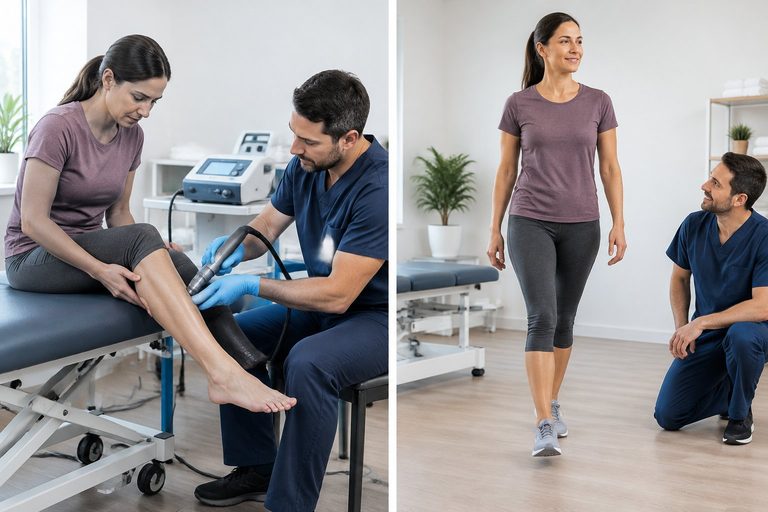
StemWave therapy uses focused acoustic pressure waves, delivered through a handheld applicator, to stimulate healing in tissue that has stopped repairing itself normally. It’s non-invasive, meaning nothing is injected and nothing is cut, and according to StemWave’s own product information, treatment sessions typically run under 10 minutes.
The device sends mechanical energy into the target area. That energy isn’t heat or electricity. It’s a pressure wave that your body interprets as a signal to start repairing again.
How Acoustic Waves May Support Blood Flow and Tissue Repair
A 2024 systematic review of extracorporeal shockwave therapy across various tendinopathies found that this type of acoustic wave increases local blood flow and stimulates cellular repair mechanisms, contributing to reduced pain and improved function over a course of sessions.
Better blood flow means more oxygen and nutrients reach the damaged tendon, ligament, or joint capsule. For someone with plantar fasciitis, that can mean the thick band of tissue on the bottom of the foot finally gets what it needs to remodel and strengthen.
- Increased blood flow to the treated area
- Stimulation of cellular repair mechanisms
- Reduced inflammation at the source of pain
- Breakdown of adhesions or scar tissue that restrict movement
This is a mechanical process, not a guess. The next question is why some injuries never seem to reach that repair stage on their own.
Why Chronic Pain Can Persist After the Initial Injury
Acute pain is part of a healthy inflammatory response, but chronic pain often means that process got stuck partway through. The tendon or joint never fully transitions from injury to repair.
Scar tissue can form in a disorganized pattern, blood flow to the area can stay reduced, and the nervous system can keep signaling pain long after the original injury healed. This is common in rotator cuff tendinopathy, tennis elbow, and chronic knee pain that never quite resolves.
Recognizing that your pain is a stalled healing process, not a mystery, changes how you approach treatment. The next step is knowing which specific conditions respond best to this kind of intervention.
Which Pain Conditions May Respond to This Approach?
Tendon injuries, plantar fasciitis, and several types of chronic joint pain are among the conditions most commonly treated with focused wave therapy. The same 2024 systematic review found meaningful pain reduction across plantar fasciitis, Achilles, patellar, and lateral epicondylitis (tennis elbow) tendinopathy in the trials reviewed.
The common thread across these conditions is tissue that stopped healing after the initial injury phase. That’s why StemWave is used alongside a broader evaluation, not as a stand-alone fix for every type of pain.
Tendon Pain, Plantar Fasciitis, and Soft-Tissue Injuries
Tendons have limited blood supply compared to muscle, which is part of why tendon injuries drag on for months instead of weeks. Plantar fasciitis, patellar tendinopathy, and golfer’s or tennis elbow all fall into this category.
- Plantar fasciitis (heel pain, worse with first steps in the morning)
- Rotator cuff tendinopathy (shoulder pain with overhead movement)
- Patellar tendinopathy (pain below the kneecap, common in runners and jumpers)
- Tennis elbow and golfer’s elbow (pain on the outside or inside of the elbow)
- Achilles tendinopathy (pain and stiffness at the back of the heel)
If any of these sound like your own daily pain pattern, the next category may apply just as directly.
Chronic Joint and Disc-Related Pain: When a Full Evaluation Matters
Joint pain tied to tendon involvement, such as hip bursitis or mild to moderate knee osteoarthritis, is another area where this approach is commonly used. Calcific tendinitis in the shoulder is another example patients often recognize by name.
Not every joint or back complaint fits this treatment. Disc-related pain, nerve compression, and structural spine issues require a full spinal evaluation before any soft-tissue treatment makes sense. A clear picture of what’s driving your pain (joint, tendon, or something deeper in the spine) shapes which approach actually helps you first.
How Does StemWave Differ From TENS, Ultrasound, and Cortisone?
StemWave uses mechanical acoustic energy that reaches deeper tissue layers, while TENS and diagnostic ultrasound work through electrical stimulation or surface-level sound waves. Understanding this difference explains why patients who tried a TENS unit at home still have unresolved tendon pain.
Focused Waves vs. Electrical Stimulation and Diagnostic Ultrasound
TENS units send electrical current through the skin to interrupt pain signals before they reach the brain. That can dull pain temporarily, but it does nothing to stimulate tissue repair at the cellular level.
Diagnostic ultrasound primarily affects surface-level structures and is often used alongside other treatments rather than as a stand-alone solution. StemWave uses high-energy acoustic waves that penetrate deeper into tissue to stimulate repair and circulation, a mechanism ultrasound and laser therapy don’t share.
- TENS: Blocks pain signals temporarily; no tissue repair effect
- Diagnostic ultrasound: Surface-level effect; often paired with other therapies
- StemWave: Deep tissue penetration; stimulates cellular repair and blood flow
If you’ve used a TENS unit at home and felt short-term relief that faded within hours, that’s expected. It’s addressing signals, not the tissue itself.
A Different Path Than Steroid Injections
Cortisone injections reduce inflammation quickly but don’t repair the tendon or joint tissue causing the pain. They mask the problem rather than restart the healing process.
Repeated cortisone shots can also weaken tendon tissue over time, which is part of why many patients look for other options before another round of injections. A thorough evaluation helps determine whether StemWave, movement correction, or another approach best fits your specific tendon or joint issue.
Neither approach guarantees a fix on its own. What matters is matching the right tool to what’s actually happening in your tissue, which starts with an honest look at what a treatment plan involves.
What Happens During Treatment and Who Is a Good Candidate?
A StemWave session takes less than 10 minutes and involves no needles, incisions, or sedation. Most patients return to normal activity the same day.
What a Typical Visit and Care Plan Look Like
The provider applies gel to the target area and moves the handheld applicator over the tendon, joint, or soft tissue. A typical care plan involves multiple sessions spaced roughly a week apart, since tissue repair happens gradually over several weeks.
Good candidates include people with chronic tendon pain lasting more than six weeks who haven’t found lasting relief from rest, stretching, or over-the-counter pain relievers. Common examples include athletes with nagging tendinopathy and adults with plantar fasciitis or hip bursitis.
Expected Sensations, Safety Considerations, and When to Seek Other Care
Most patients describe a deep pressure or mild discomfort during treatment, with some soreness afterward similar to a workout. This is a normal part of the tissue response, not a sign of harm.
StemWave carries a favorable safety profile since it doesn’t involve needles or drugs. It’s not appropriate for pregnant patients, people with active infections at the treatment site, or those with certain blood clotting disorders, which a proper intake evaluation screens for before your first session.
How Much Does StemWave Therapy Cost and Does Insurance Cover It?
Pricing varies by clinic and treatment plan, and published rates for Lone Tree providers aren’t standardized across the industry. Many clinics position it as a more affordable option compared to surgery or a series of injections over time.
Insurance coverage for StemWave is inconsistent nationwide, since some plans classify it as an elective wellness treatment rather than a covered medical procedure. Ask directly during your evaluation what your plan covers and what a realistic per-session cost looks like for your specific condition.
Knowing what a session feels like and what it costs answers the practical questions. What ties it all together is how this fits into a longer-term plan for your body.
Building a Plan to Restore Movement and Reduce Pain
Lasting relief from chronic tendon or joint pain comes from combining tissue-level treatment with correcting the movement patterns that caused the strain in the first place. StemWave can restart a stalled healing process, but the mechanics that led to that strain need attention too.
A runner with recurring Achilles pain might have tight calves, poor ankle mobility, or a gait pattern that overloads one side. Treating the tendon without addressing the movement pattern often means the same pain returns within months. That’s why a broader evaluation, looking at posture, joint mobility, and movement mechanics, matters as much as the acoustic wave treatment itself.
- Address the tissue: reduce inflammation and stimulate repair in the tendon or joint
- Address the mechanics: identify and correct the movement pattern causing repeated strain
- Address the habits: build strength and mobility work into daily routines to prevent recurrence
Frequently Asked Questions
Does StemWave Therapy Actually Work for Chronic Pain?
Many patients with plantar fasciitis, rotator cuff tendinopathy, and similar chronic conditions notice meaningful improvement within 3 to 6 sessions, consistent with peer-reviewed research on shockwave therapy for tendinopathies. Results vary depending on how long the tissue has been irritated and whether the provider also addresses an underlying mechanical issue.
How Many StemWave Treatments Will I Need?
Most care plans involve several sessions spaced about a week apart, since tissue repair unfolds gradually rather than all at once. Your provider adjusts the total number of sessions based on how your tissue responds over the first few visits.
Does StemWave Therapy Hurt or Require Downtime?
Sessions typically cause mild discomfort or deep pressure, with some soreness afterward similar to post-workout muscle fatigue. No downtime is required, and most patients return to normal daily activity immediately after treatment.
Does Insurance Pay for StemWave Therapy?
Coverage depends on your specific insurance plan, since many providers classify this treatment as elective rather than a standard covered service. Ask your provider directly about cost and whether your plan offers any reimbursement before starting a care plan.
Where Can I Get StemWave Therapy Near Lone Tree, CO?
Metro Acute Chiropractic offers StemWave therapy as part of a broader evaluation for chronic tendon, joint, and soft-tissue pain in the Lone Tree and Denver Tech Center area. A hands-on assessment determines whether StemWave, movement correction, or a combined plan best fits your specific condition.
Ready to Restart the Healing Process?
You’ve read what stalls healing and what helps restart it. If chronic tendon or joint pain has followed you through months of rest without real change, a tailored plan can finally address the tissue and the mechanics behind it.
If this sounds like what you have been living with, we would like to help. Reach out to Metro Acute Chiropractic and let’s figure out the root cause together.