That first step out of bed sets the tone for your whole day. Your heel feels like it is bruised or split; you hobble to the bathroom, and after a few minutes the sharpness fades into a dull ache. Then you sit through a meeting or a drive, stand up, and the stab is right back where it started.
Plantar fasciitis is not something you simply wait out, because the tissue under your foot keeps getting loaded every single day you walk on it. That is why heel pain that started as a morning annoyance can turn into months of guarding, shortened walks, and skipped workouts. The right plan looks at why the tissue got overloaded in the first place, not just how to numb it.
Keep reading to learn what is actually happening in your foot, which at-home steps genuinely help, why rest alone often stalls, and what advanced care can do when heel pain will not let go. Lasting relief means walking through an airport, standing through a shift, or starting a run without bracing for that first painful step.
What Is Causing Pain Along the Bottom of Your Foot?
Plantar fasciitis is the most common source of foot pain under the heel, and it follows a pattern most people recognize as soon as it’s described. It comes from irritation and tiny tears in the thick band of tissue that runs along the sole of your foot.
The Plantar Fascia and Heel Bone Connection
The plantar fascia is a strong, fibrous band that anchors to your heel bone, called the calcaneus, and fans forward toward the base of your toes. It supports your arch and acts like a spring, storing and releasing energy with every step.
When that band is asked to handle more load than it is ready for, the fibers near the heel bone develop small tears and inflammation. The tissue becomes sensitive where it attaches, which is why pressing on the inside of your heel often reproduces the pain.
Common Symptoms and the Morning-Pain Pattern
Plantar fasciitis symptoms are usually sharp and pinpointed at the bottom of the heel, sometimes spreading into the arch. Overnight, your foot rests in a pointed position, and the fascia shortens slightly, so those first steps stretch irritated tissue all at once.
The pain typically eases as you move and the tissue warms up. It returns after sitting, after a long day standing, or the next morning, which suggests the underlying irritation never fully resolved.
Overuse, Foot Shape, and Everyday Strain
Most cases start as an overuse injury after something changed. Common triggers include:
- A jump in running, walking, or jumping activity, or returning to sport after a break
- Long hours standing on hard surfaces or starting a new job on your feet
- A tight calf or stiff Achilles tendon pulling extra tension into the fascia
- Flat feet or high arches that change how force spreads across the foot
- Carrying extra weight, since being overweight or dealing with obesity raises load per step
- Worn-out shoes, high heels, flip-flops, or lots of walking barefoot on hard floors
Runners and people who stand all day account for a large share of cases. The encouraging part is that most of these triggers respond well to changes you can start making this week.
Start With a Practical Plan for Daily Relief
The best first move is not total shutdown. It is trading the activities that spike your pain for ones your foot can handle while you calm the tissue down.
Reduce Aggravating Activity Without Stopping All Movement
Pull back on the specific thing that flares your heel, whether that is running mileage, long barefoot stretches at home, or standing on concrete without a break. Cut the volume rather than stopping everything, because complete rest weakens the tissue you are trying to rebuild.
Keep moving with low-impact activities like swimming, cycling, or shorter walks on softer surfaces. Walking in supportive shoes at a comfortable distance is often fine and helps maintain circulation and tolerance.
Use Ice, Gentle Mobility, and Targeted Stretching
An ice pack or an ice massage on the heel for 15 to 20 minutes after activity helps quiet the sting. Rolling your arch over a chilled bottle feels good and adds gentle massage, though it works better as comfort than as your main treatment.
Daily stretching matters more. Work on calf stretches at a wall and a plantar fascia stretch where you pull your toes back toward your shin before standing up in the morning. Ankle range-of-motion drills keep the whole chain moving.
Choose Footwear and Inserts That Reduce Strain
Footwear does more than almost anything else during a flare. Look for supportive shoes with a firm heel counter and real arch support, and retire shoes with collapsed cushioning.
Shoe inserts, insoles, heel cups, or custom orthotics can reduce strain by supporting the arch through each step. Athletic tape and compression socks offer short-term relief, and night splints hold the foot in a neutral position so morning steps hurt less. Even with all of this, some heels stay stubborn, and there is a clear reason why.
Why Rest Alone Often Does Not Resolve Lingering Pain
Rest calms symptoms, but it does not build the capacity your foot needs to handle daily life. That gap is why so many people feel better for a week off, then hurt again within days of returning to normal activity.
When Protecting the Foot Turns Into Deconditioning
Time off reduces tissue sensitivity, which feels like healing. Meanwhile, your calf, foot muscles, and fascia lose strength and load tolerance, so the same walk that felt fine two months ago now overloads a weaker system.
This is how a short flare becomes chronic pain. You limp, shift weight to the other side, and end up with hip, knee, or low back complaints layered on top of the original foot pain.
Rebuild Strength and Tolerance With Guided Rehabilitation
Rehabilitation flips the plan from protection to progression. Physical therapy-style loading, especially heel raises done slowly and progressed over weeks, rebuilds the calf and fascia so they can tolerate real-world demand.
Hands-on work has a place too. Targeted massage, soft tissue release, and dry needling can reduce muscle guarding in the calf and foot, and ultrasound is sometimes used to support tissue work. These make loading more comfortable rather than replacing it.
When Medication Can Help and Its Limits
NSAIDs such as ibuprofen or naproxen may take the edge off a painful stretch for days. NSAIDs and other pain relievers reduce inflammation and discomfort, which can help you sleep and stay active.
They do not repair tissue or change the mechanics that caused the problem. For heel pain that has settled into severe plantar fasciitis, the more useful question becomes how to restart healing in tissue that has stalled.
How Stemwave Therapy Supports Healing at the Source
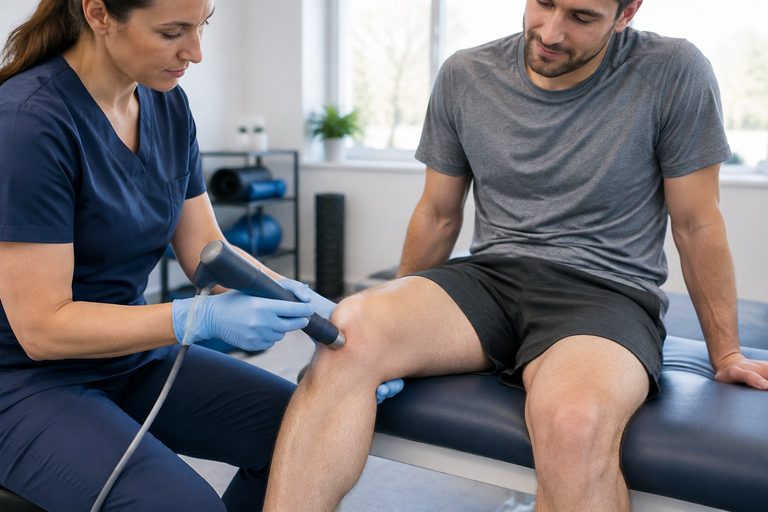
Stemwave therapy is a form of shockwave therapy, also called extracorporeal shockwave therapy or ESWT, that targets the tissue itself instead of the pain signal. It is non-invasive, drug-free, and delivered right in the office.
What Acoustic Wave Treatment Is Designed to Do
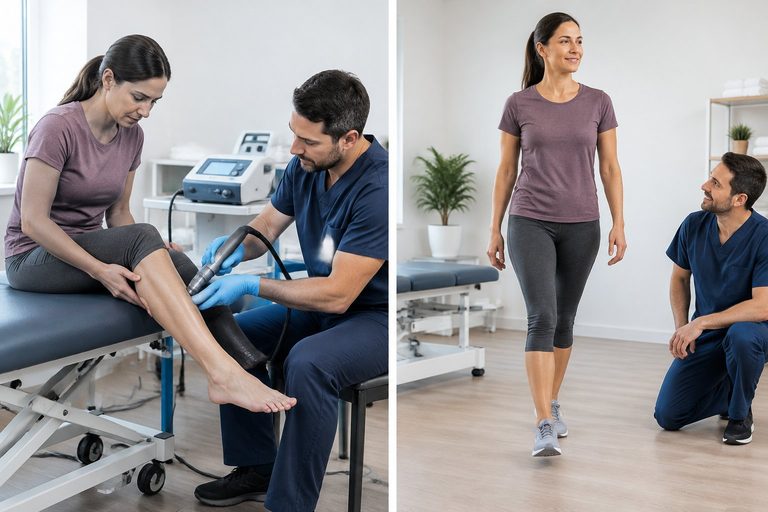
A handpiece sends focused acoustic waves through the skin into the plantar fascia. Those waves increase blood flow to an area that gets very little circulation and stimulate the cellular repair response in tissue stuck in a non-healing state.
Sessions are short, often around five to ten minutes per area. Most people describe a firm tapping or pulsing sensation, sometimes tender over the sorest spot, with no downtime afterward. A typical plan involves a series of visits spaced out over several weeks.
Who May Benefit From Shockwave Therapy
Shockwave therapy tends to be most useful for people whose heel pain has already outlasted the basics. Good candidates often include:
- Heel pain lasting longer than six to eight weeks despite stretching and better footwear
- Chronic pain that keeps returning every time activity increases
- Severe plantar fasciitis interfering with work, sleep, or training
- Anyone hoping to avoid injections or surgery while still making real progress
Combining Care for Foot Mechanics and Lasting Support
Stemwave works best as part of a full plan. Chiropractic adjustments to the foot, ankle, and pelvis restore motion where restriction is forcing the fascia to absorb extra load, and that changes how you push off with every step.
Custom orthotics then hold the correction. Fitted arch support keeps the fascia from overstretching during the hours you spend on your feet, protecting the healing the acoustic waves helped start. If pain still persists, the next step is finding out what else might be going on.
When to Seek an Evaluation for Persistent Heel Pain
Not every painful heel is plantar fasciitis, and a proper exam saves months of guessing. A provider or podiatrist will take your medical history, test how you load your foot, and press specific structures to identify the source.
Ruling Out Other Causes of Heel and Foot Pain
Imaging tests are not always needed, but an X-ray or ultrasound helps when the story is unusual. A calcaneal stress fracture, nerve irritation, or a fat pad problem can mimic fasciitis and needs a different plan entirely.
Heel spurs often show up on imaging, but according to the American Academy of Orthopedic Surgeons, only about 1 in 20 people with a heel spur actually has foot pain. A heel bone spur is usually a result of long-term tension on the fascia rather than the cause of your pain, which is why treatment targets the tissue, not the bone. Get checked promptly for swelling, numbness, night pain that will not change with position, or an inability to put weight through the foot.
Advanced Options for Pain That Has Not Improved
When months pass without progress, other options exist. A walking boot or cane can temporarily offload the foot, and steroid injections or cortisone injections may quiet severe flares, though repeated use can weaken the fascia.
PRP, or platelet-rich plasma, and procedures such as Tenex aim to stimulate repair in damaged tissue. Plantar fasciotomy surgery is reserved for the small number of cases that fail everything else after many months.
Take the Next Step Toward Comfortable Walking
Most people never need those last steps. Getting an accurate diagnosis early, correcting the mechanics, and loading the tissue properly resolves the large majority of heel pain.
If your first steps still hurt after weeks of trying on your own, that is a signal worth acting on rather than adapting around.
Frequently Asked Questions
What Are the Best Ways to Relieve Heel Pain From Plantar Fasciitis at Home?
Ice the heel after activity, stretch your calf and plantar fascia daily, and switch to supportive shoes with real arch support instead of flat sandals. Reduce the activity that spikes your pain rather than stopping all movement, and consider a night splint if mornings are the worst.
What Stretches and Exercises Can Help Heal Plantar Fasciitis?
Pull your toes back toward your shin to stretch the fascia before you stand up in the morning, and do wall calf stretches with the knee straight and bent. Then add slow heel raises and increase the load over several weeks, since strength raises your tolerance for walking and standing.
Does Plantar Fasciitis Go Away on Its Own, or Do I Need Treatment?
Mild cases sometimes settle within a few weeks if you adjust footwear and activity early. Once heel pain has lasted a couple of months, it usually needs guided treatment, because the tissue has adapted to a cycle of daily overload that rest alone does not break.
Is Walking Helpful or Harmful When I Have Plantar Fasciitis?
Walking in supportive shoes at a comfortable distance is generally helpful and keeps the tissue tolerant of load. What hurts is a sudden jump in mileage, long barefoot stretches on hard floors, or standing all day without a break.
What Treatments Can Help if Heel Pain Does Not Improve With Rest and Stretching?
Stemwave shockwave therapy stimulates blood flow and repair in fascia that has stalled in the healing process. Pairing it with chiropractic adjustments for foot and ankle mechanics and custom orthotics for daily support addresses the cause instead of just the symptom.
When Should I See a Chiropractor or Other Provider for Persistent Heel Pain?
Book an evaluation if heel pain has lasted more than three to four weeks, is changing how you walk, or keeps returning every time you get active again. Get seen sooner for numbness, swelling, or pain that stops you from putting weight on the foot.
Ready to Take That First Step Without Wincing
Plantar fasciitis responds well when the plan matches the problem: calm the irritated tissue, correct the mechanics loading it, and rebuild strength so your foot can handle your actual life. Rest by itself rarely gets you there, and neither does another pair of insoles from the pharmacy.
If your heel has been hurting for weeks and you are weighing whether to wait it out or do something about it, now is the time to get a real answer. At Metro Acute Chiropractic in Lone Tree, care starts by finding what is driving your foot pain, then building a plan around Stemwave therapy, adjustments, and custom orthotics when they fit your case.
Take the first step toward lasting relief. Schedule your visit with our team in Lone Tree and find out what personalized care can do for you.