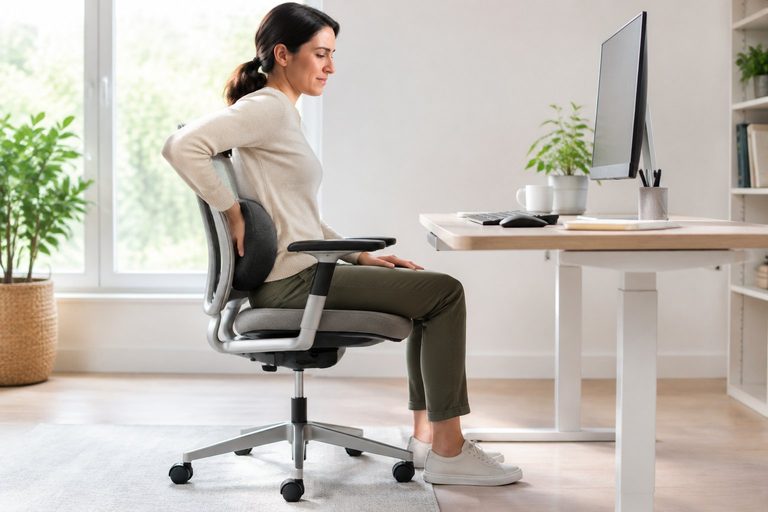
Your lower back has felt tight for weeks, and you can’t tell if it’s the muscle or something deeper in the joint. Maybe you’ve tried stretching, foam rolling, even a heating pad, but the tension keeps coming back within a day or two. You’re stuck wondering if you need a massage therapist, a physical therapist, or a chiropractor, and nobody has given you a straight answer.
This is exactly the kind of question a whole-body approach is built to answer. A clinic that looks at both your soft tissue and your joint mechanics, rather than treating symptoms in isolation, can tell you which structure is actually driving your pain before recommending a plan.
In this guide, you’ll discover how myofascial release and chiropractic adjustments differ, which symptoms point to each one, and why many recovery plans use both. The right treatment depends on whether your pain is coming from tight, restricted tissue or a joint that isn’t moving the way it should, and a proper exam is the only way to know for sure.
What Each Technique Actually Targets
Myofascial release and chiropractic adjustments work on two different structures in your body, even though both aim to reduce pain and restore motion. One works on soft tissue. The other works on the joint itself.
Knowing the difference helps you understand why your pain might respond to one approach and not the other, or why some symptoms need both.
How Myofascial Release Works on Fascia and Soft Tissue
Myofascial release targets the fascia, the connective web wrapping around your muscles, nerves, and organs, using slow and sustained pressure. As Cleveland Clinic explains, a practitioner locates fascial tissue that feels stiff and tight, then holds sustained pressure on it, letting the tissue soften gradually rather than kneading it the way a flowing massage would.
This is different from a flowing massage. The pressure stays in one place and builds, which is what allows fascia, not just the muscle above it, to actually release. Because fascia is one continuous structure connecting your muscles, nerves, and joints throughout the body, tightness in one area, called a trigger point, can produce pain or restriction somewhere else entirely.
Fascia restriction commonly shows up as:
- Deep, diffuse aching that’s hard to pinpoint to one spot
- Reduced range of motion that doesn’t improve much with stretching alone
- Compensation patterns, like one hip always feeling tighter than the other
- Tension that returns quickly after a massage or foam rolling session
This kind of restriction rarely stays contained to one muscle. It often connects to how a nearby joint moves.
How Chiropractic Adjustments Restore Restricted Joint Motion
Chiropractic adjustments use a controlled, targeted force to move a joint that has become restricted or misaligned. The goal is to restore normal motion at that specific segment, whether it’s in your neck, mid-back, or lower spine. The National Center for Complementary and Integrative Health (NCCIH), part of the NIH, describes this as a controlled thrust applied to a spinal joint that moves it further than it would move on its own.
Unlike soft tissue work, an adjustment isn’t about relaxing muscle. It’s about correcting the joint’s mechanics so it moves the way it’s supposed to. When a joint has been stuck for weeks or months, the surrounding muscles often tighten protectively, which is why joint restriction and muscle tightness often occur together.
Chiropractors evaluate posture, joint mobility, and movement patterns to identify exactly where the restriction originates before choosing a treatment approach. A patient with a stiff, locked-feeling neck that limits how far they can turn their head is often describing a joint restriction rather than a muscle knot. That distinction changes what kind of hands-on care actually helps.
How to Recognize a Soft-Tissue or Joint-Restriction Pattern
Your symptoms often point toward one structure or the other, even before a formal exam. Noticing the pattern helps you describe your pain more clearly during an evaluation.
Fascia problems and joint problems tend to feel different, move differently, and respond differently to daily activity. Noticing these details gives you a head start on understanding your body.
Signs Tight or Restricted Fascia May Be Driving Your Pain
Restricted fascia often feels like a dull, widespread tightness rather than a sharp, localized pain. You might notice it across your upper back, down the side of a leg, or through your shoulder and neck as one connected band of tension.
People with fascia restriction often describe feeling “tight everywhere” even after rest. Stretching may help temporarily, but the tightness returns within hours. This happens because tightened, restricted fascia can limit range of motion and lead to compensatory movement patterns that keep pulling you back into the same tight posture.
Watch for these clues:
- Pain that shifts location slightly from day to day
- A pulling or dragging sensation during certain movements
- Muscle knots that come back quickly after a massage
- Tightness that seems to travel along a chain, like from your hip into your low back
If your symptoms match a specific joint instead, like a locked feeling that limits one direction of motion, that points toward a different structure entirely.
Signs a Stiff Joint May Be Limiting Movement
A restricted joint usually creates a sharper, more localized limitation, often in one specific direction of movement. You might be able to turn your head to the left with no trouble, but turning right feels stuck or produces a pinch.
This kind of restriction often comes with stiffness that’s worse first thing in the morning and improves somewhat with movement, though it doesn’t fully resolve. A joint that has lost normal motion tends to stay consistent in where it hurts, unlike fascia pain that can shift or radiate.
Common signs include a specific spot that always feels “stuck,” a popping or grinding sensation with certain movements, and pain that intensifies with a particular motion, like bending backward or rotating. Describe these patterns clearly during an evaluation, since they help determine whether soft-tissue work, joint-focused care, or a combination fits your situation best.
When One Approach May Help More Than the Other
Certain pain patterns respond better to soft-tissue work, while others need joint-focused correction first. Matching the right technique to the right symptom is what separates guesswork from a targeted plan.
Neither approach is universally better. Each solves a different mechanical problem, and your specific complaint usually points to a starting point.
Pain Patterns Often Addressed With Soft-Tissue Work
Chronic muscle tightness, trigger points, and fascia restriction respond well to sustained pressure techniques like myofascial release. This includes conditions like chronic low back tension from long hours of sitting, tightness through the shoulders and upper back from repetitive movement, and IT band or hip tightness common in runners.
Myofascial release digs deeper into the fascial layers than a typical massage, making it useful for tension that builds up gradually rather than from a single injury. Patients dealing with chronic tightness that flares with stress or repetitive strain often notice more lasting change with this approach compared to standard massage alone.
Soft-tissue work tends to help most with:
- Chronic tension headaches tied to tight neck and shoulder muscles
- Recurring muscle knots in the upper back or calves
- Tightness that limits flexibility more than it limits strength
- Post-exercise soreness that lingers longer than expected
If your pain instead centers on a joint that won’t move freely, a different kind of care usually makes more sense.
Symptoms That May Respond to Joint-Focused Care
Chiropractic adjustments tend to help most when the primary problem is restricted joint motion rather than muscle tension alone. This includes a stiff neck that limits turning in one direction, low back pain that worsens with certain movements like bending or twisting, and joint stiffness that’s consistent and localized rather than shifting.
Adjustments work by applying a controlled thrust to move a restricted joint through more range than it would move on its own, restoring more normal motion and reducing the mechanical stress on surrounding tissue. Patients often notice improved motion within the same visit, though full resolution of chronic stiffness usually takes a series of visits.
The clearest sign joint-focused care fits your situation is a specific, repeatable limitation, like always feeling stuck when reaching overhead or rotating your torso. That kind of consistent pattern is worth bringing up during an evaluation, especially if it hasn’t improved with stretching or rest.
Why a Combined Treatment Plan Often Makes Sense
Most chronic pain involves both tight soft tissue and joint restriction working against each other, which is why many treatment plans use both techniques together. Addressing only one side of that cycle often leads to symptoms returning within days or weeks.
A joint that gets adjusted but stays surrounded by tight, restricted fascia tends to drift back toward the same restricted pattern. The muscle simply pulls it there again.
Addressing Tension That Can Pull Joints Back Into Old Patterns
When a joint is adjusted, the correction holds only if the surrounding muscles and fascia aren’t pulling it back out of place. If the soft tissue restriction remains, tight muscle can pull the joint back toward its old, restricted position, which explains why some patients feel temporary relief that fades within a day or two.
This works in both directions. Soft tissue therapy can release a tight muscle, but if the joint underneath stays restricted, the muscle tightens again as a protective response. Breaking this cycle usually requires treating both the joint and the surrounding tissue in the same plan.
Patients dealing with chronic lower back pain often see this pattern clearly. Soft tissue work loosens the surrounding muscle, while the adjustment restores proper joint mechanics; together, they support longer-lasting relief than either approach alone.
What a Personalized Evaluation Should Assess
A thorough evaluation looks at your posture, joint mobility, and muscle tightness together, not as separate, unrelated findings. This means checking how your joints move through their full range, testing which muscles are guarded or tight, and identifying compensation patterns that may be masking the original source of pain.
A proper exam should include:
- A review of when your pain started and what makes it better or worse
- Joint mobility testing to check for restriction at specific spinal segments
- Palpation of soft tissue to identify fascia restriction or trigger points
- A discussion of your daily habits, like sitting posture or repetitive movements
This assessment determines whether your plan should lead with adjustments, soft tissue work, or a blend of both from the first visit. Once that pattern is clear, building a plan that actually holds becomes much more straightforward.
Finding the Right Mix for Lasting Relief
The right combination of myofascial release and chiropractic adjustment depends on how your specific pain behaves, not on a fixed formula that works the same for everyone. A typical plan starts with an evaluation to find which structure is driving the pain, then blends both techniques and shifts that mix over time as your joints and tissue respond.
Metro Acute Chiropractic builds that plan around your actual response, not a template. Visit our homepage to learn more about our whole-body approach and find out what personalized care can do for you.
Frequently Asked Questions
Do chiropractors use myofascial release?
Many chiropractors incorporate myofascial release directly into their treatment plans alongside spinal adjustments. They often use soft tissue techniques alongside adjustments to address muscular and fascial dysfunction that contributes to joint restriction.
Is myofascial release the same as massage?
No, myofascial release uses slow, sustained pressure held for a period of time, while traditional massage relies on flowing strokes. The goal of myofascial release is to release restrictions in the fascia layer, not just relax the surface muscle.
Does a chiropractic adjustment hurt or always make a popping sound?
An adjustment typically shouldn’t hurt, and a popping sound isn’t required for the treatment to be effective. That sound comes from gas releasing within the joint, and it’s a normal byproduct of the joint moving through a larger range of motion, not a measure of how well the adjustment worked.
What are the downsides of myofascial release?
Myofascial release can cause temporary soreness after a session, similar to how a deep tissue massage might feel the next day. It also requires multiple sessions for lasting change, since fascia responds gradually rather than after a single treatment.
When should you not get myofascial release?
Myofascial release isn’t appropriate over areas with acute injury, open wounds, or unhealed fractures. If you have a suspected joint dislocation or an undiagnosed cause of pain, a proper evaluation should happen before any soft tissue technique is applied.
Can I receive myofascial release and chiropractic adjustments in the same visit?
Yes, many treatment plans combine both in a single visit, often starting with soft tissue work to prepare the area before an adjustment. This sequence can help the joint correction hold longer, since releasing tight fascia around a joint reduces some of the pull working against the adjustment.
If you’re still unsure whether your pain is coming from tight tissue, a restricted joint, or both, a hands-on evaluation is the fastest way to find out. You do not have to keep guessing which approach might work. Reach out to Metro Acute Chiropractic and let’s figure out the root cause together, then build a plan specific to how your body is actually moving and healing.