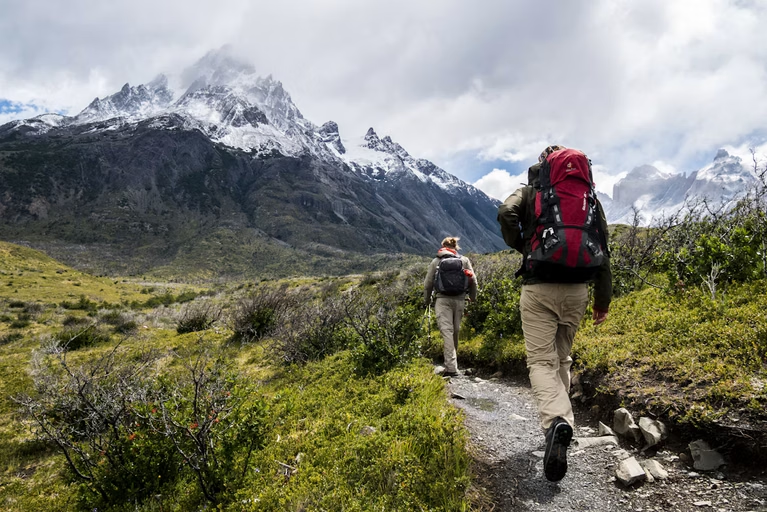
Knee pain hiking downhill usually comes from your quadriceps and kneecap working overtime as brakes, and it often eases with shorter steps, trekking poles and a few weeks of targeted leg and hip strengthening. Most hikers notice it on the return to the trailhead, when the climb is over and the legs are already tired.
That timing says a lot. Going up asks your muscles to push. Coming down asks them to catch your full body weight on every step, often while carrying a pack over loose rock. Along the Front Range, a single trail can drop more than a thousand feet in a couple of miles, and 14er routes often descend 3,000 feet or more, so your knees take thousands of braking steps in one afternoon.
Why Descents Are Harder on Your Knees
Your Quads Act as Brakes
When you step down, the big muscles on the front of your thigh lengthen while still holding tension. That braking work, called eccentric loading, controls how quickly your knee bends under your weight. It also presses the kneecap firmly against the thigh bone, and the deeper the bend and the bigger the step, the higher that pressure climbs. A steep trail behaves a lot like a long, uneven staircase. If your quads ache two days after a big hike, that is the same braking load your knees felt on the way down.
Steep Terrain, Fatigue and Pack Weight
Steeper grades force bigger knee bends, and loose gravel and tall rock steps add sudden jolts. Tired quads late in the day let your knee collapse inward or stiffen, so you land harder. A heavy pack multiplies the load on every stride.
What Does the Location of the Pain Suggest?
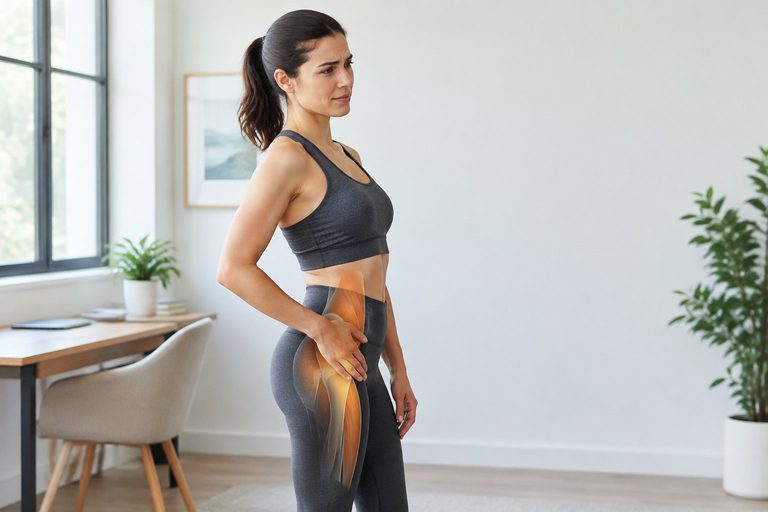
- Around or behind the kneecap: often patellofemoral pain, sometimes called hiker’s knee. It flares on descents, stairs and squats and after long drives home, and weak quads and hips let the kneecap track poorly.
- Just below the kneecap: points toward an irritated patellar tendon, which handles a heavy share of the braking force when you drop off big steps.
- Sharp pain on the outside: a classic sign of IT band syndrome, which often starts at a predictable point in the hike and worsens each mile.
- Inside the knee, or with swelling, catching or locking: can involve a ligament, bursa or meniscus, and deserves a closer look.
What to Change on the Trail
Shorter Steps, Better Foot Placement
Shorter steps keep each knee bend shallower. Land with your foot under your body and a soft, slightly bent knee, leaning very slightly forward from the hips rather than back into your heels. On rocky sections, step down to the lowest available spot; two small steps beat one big drop. Keep your knees pointing over your toes, and on wide trails, a gentle zigzag lowers the grade your knees face.
Trekking Poles
Poles take load off your legs and improve balance, and research shows they reduce forces at the knee during downhill walking. Lengthen them a few inches for descents, plant slightly ahead, then step, without overreaching.
Footwear and Foot Support
Good grip and cushioning matter on long descents, and worn-out tread or midsoles should be replaced. If flat feet or overpronation let your knees roll inward, custom orthotics can help line things up. A knee sleeve, patellar strap or kinesio tape can add comfort on long days while you build strength.
Let Your Knees Set the Pace
A steady mild ache is usually fine to keep moving with. Sharp pain, or pain that changes how you walk, means slow down, rest and shorten your stride. While you rebuild, choose routes with gentler descents and raise only one variable at a time: distance, elevation or terrain.
Strength Work for Easier Descents
Two or three short sessions a week for six weeks or more, ideally before peak season, can make a clear difference.
- Slow step-downs: stand on a low step and lower the other heel toward the floor over three to four seconds, controlling the standing knee. This copies trail braking. Start low and build up.
- Chair squats and step-ups: sit back slowly to tap a chair and stand, knees in line with toes.
- Glute bridges, banded side steps and supported lunges: hip strength keeps the knee from drifting inward on uneven ground and helps IT band pain.
- Wall sits and calf stretches: build quad endurance and keep the ankles mobile so less strain moves up to the knee.
Use the next morning as your guide. Same or better means progress; noticeably worse means drop back a level for a few days.
Knees grumbling on every trail descent? We look at your hips, knees and feet together to find why the braking load lands where it does, then Dr. Jacob Alvis builds a strength and care plan that makes the way down enjoyable again. Call (303) 221-3342 or request an appointment online.
When to Get Your Knee Assessed
Seek urgent medical care if you cannot bear weight, the knee swells quickly after a twist or fall, you heard a pop, the knee looks deformed, or it is red, hot and swollen with a fever. Calf pain and swelling after a long trip also needs prompt attention.
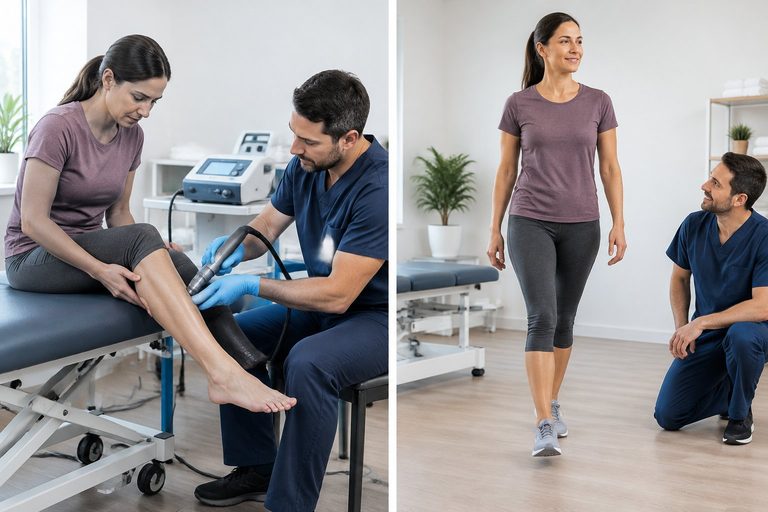
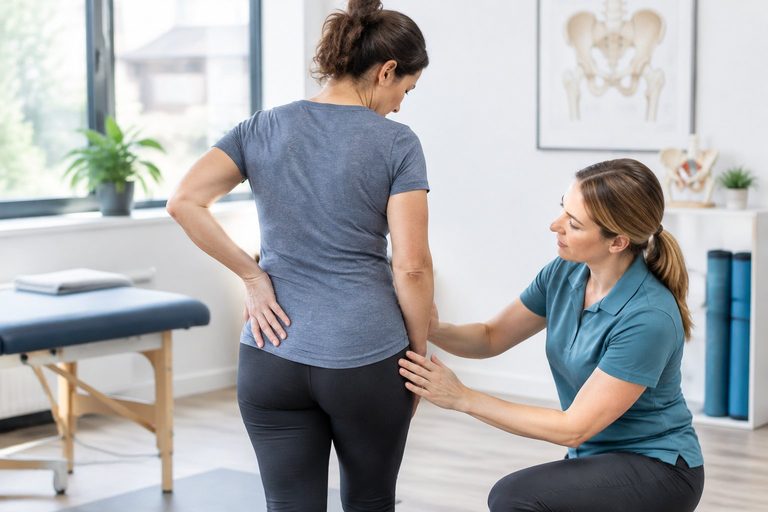
Book an assessment if downhill pain returns on every hike, lasts more than a few weeks, now shows up on stairs at home, or hurts at night. We look at the whole chain, because a stiff ankle or weak hip often drives the knee problem. Care may combine rehab, adjustments to the hips, pelvis and ankles, and, for a patellar tendon that has stalled, StemWave regenerative tissue therapy to help restart healing. You can see more on our knee pain treatment without surgery page and our main knee pain page.
The views on the way down should be the best part of the hike! Metro Acute Chiropractic has helped Front Range hikers from Lone Tree, Castle Rock and Highlands Ranch for more than 16 years. Dr. Alvis can find out why your knees protest on the descent and build a plan that gets you finishing hikes comfortably, without unnecessary medications or procedures. Call (303) 221-3342 or request an appointment online.
Frequently Asked Questions
Why do my knees hurt walking downhill but not uphill?
Downhill walking makes your quads brake while lengthening, which puts more pressure on the kneecap than pushing uphill. The knee also bends more under load as you lower your body.
How long does hiker’s knee take to improve?
With steady strengthening and smarter hiking habits, many people notice progress within six to eight weeks. Pain that lasts longer deserves an assessment.
Can I keep hiking if my knee hurts on stairs too?
Usually, if you choose gentler trails, shorten your steps and use poles. Stair pain means your knee’s tolerance is low, so build strength before big descents and get checked if pain turns sharp or swells.