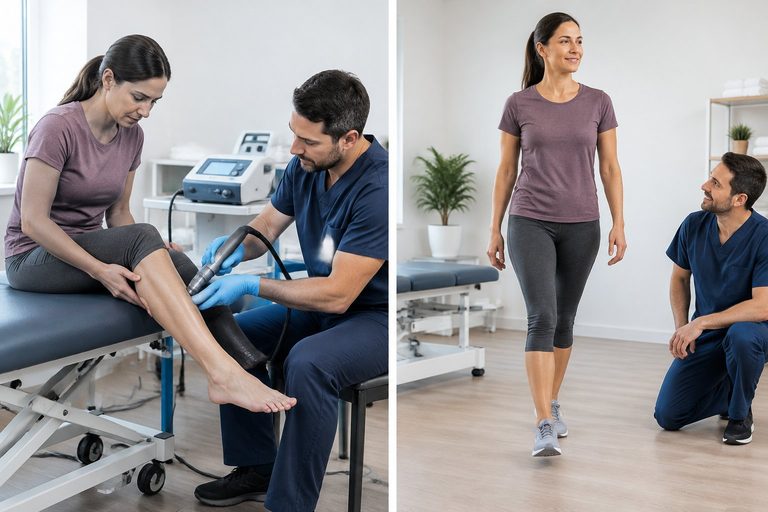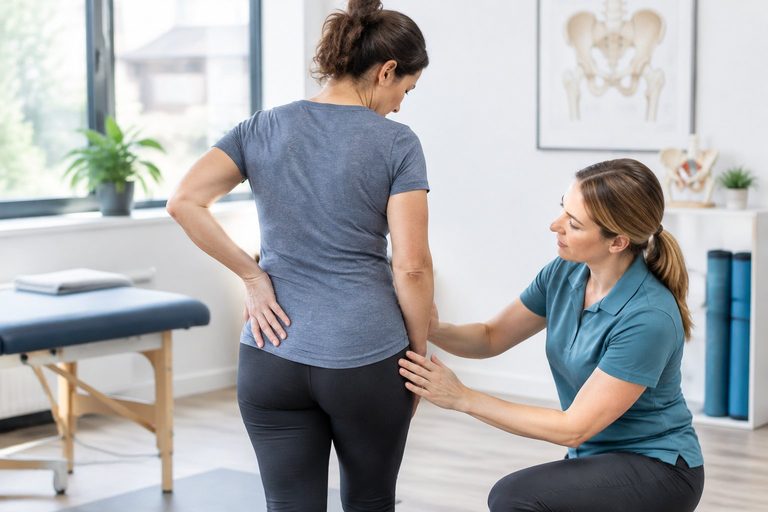
Your shoulders feel tight before you even get out of bed, and your legs still ache two days after leg day. You stretch, you foam roll, you take a hot shower, and the tightness barely budges. That kind of stuck, heavy soreness is exactly why so many active people in Denver start looking into cupping therapy.
Metro Acute Chiropractic sees this pattern often in runners, lifters, and weekend athletes whose muscles never fully reset between sessions. The clinic’s whole-body approach looks beyond the sore spot to find out why your tissue isn’t recovering the way it should.
Cupping therapy for muscle recovery in Denver has become a common next step for people whose soreness and tightness don’t respond to rest alone.
In this guide, you’ll discover how cupping actually works, when it helps, and what a first session feels like from start to finish. As one chiropractor might put it before your first visit: your body already knows how to heal; cupping just helps clear the way.
How Cupping Supports Muscle Recovery
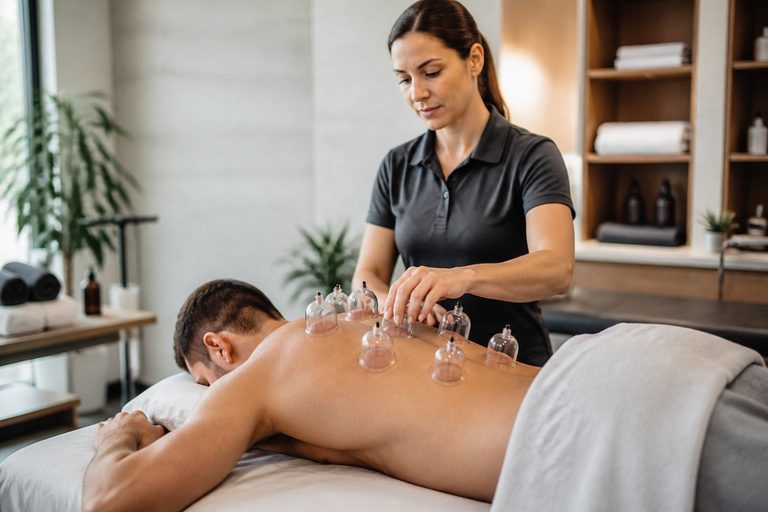
Cupping supports recovery by pulling blood flow into tight muscle tissue and giving stuck fascia room to move again. The suction lifts the skin and the layer just beneath it, which is the opposite of the pressing motion used in massage.
That lifting action changes how fluid and blood move through the treated area. A 2021 randomized study found that cupping produced a measurable delayed recovery benefit for fatigued muscle tissue compared to a no-treatment control, showing up most clearly 24 hours after training rather than immediately. For someone dealing with hamstring tightness after long runs or shoulder soreness from repeated overhead lifting, that extra circulation can make the tissue feel less dense within a day or two.
What Negative Pressure Does to Soft Tissue
Negative pressure draws the skin, muscle fibers, and connective tissue upward into the cup instead of compressing them. According to the National Center for Complementary and Integrative Health (NCCIH), part of the NIH, this suction may help reduce pain in some people, though the agency notes that overall research on cupping remains limited and mostly low quality. That upward pull feels very different from the deep pressure you feel during a sports massage.
For a runner with tight calves or a lifter with a locked-up upper back, this decompression can loosen tissue that has been guarding itself against strain. The goal is not to force the muscle to relax through pressure, but to create space so it can release on its own.
Why Tight Fascia Can Limit Comfortable Movement
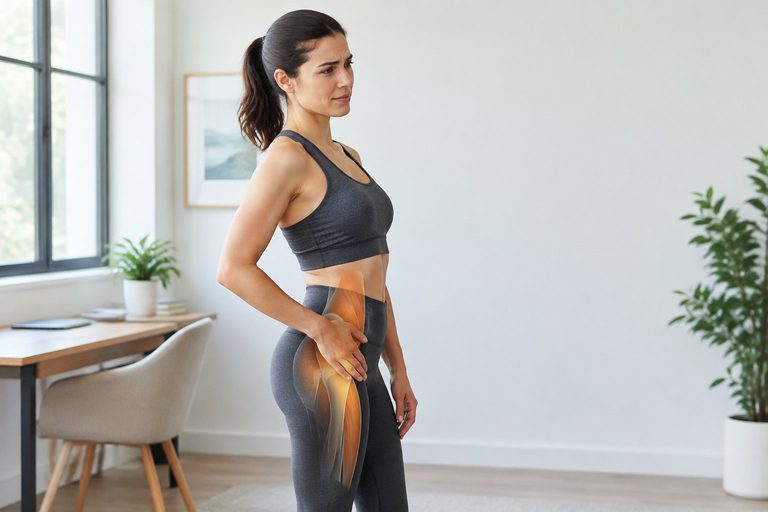
Tight myofascial release is the connective tissue wrapped around your muscles, and when it stiffens up, it can restrict how far a joint moves comfortably. Fascia can become tight from injury, overuse, or simply staying in one position too long, and tight fascia can contribute to pain, restricted movement, and changes in posture.
That restriction often shows up as a hip that will not fully rotate during a squat or a shoulder that catches halfway through an overhead reach. Cupping targets that layer directly instead of only working the surface muscle. Once you understand what is happening under the skin, it becomes easier to recognize when your own soreness is more than a normal post-workout ache.
When Cupping May Help After Training
Cupping tends to help most when soreness lingers, movement feels restricted, or a specific muscle group stays tight no matter how much you stretch it. It works best as part of a recovery routine rather than a one-time fix for a single hard workout.
Athletes and active adults use cupping for a range of training-related complaints. A 2023 systematic review of cupping in musculoskeletal and sports rehabilitation found low-to-moderate quality evidence that it can decrease pain and increase blood supply to the treated area, with a low rate of adverse effects. That makes it a reasonable option for tightness that builds up over a training block rather than a single session.
Muscle Soreness and Persistent Tightness
Persistent soreness that lasts more than two or three days after a workout signals that your muscles are struggling to clear waste products and recover normally. Cupping increases circulation to that area, which can help reduce the heaviness and stiffness that makes walking down stairs or bending over uncomfortable.
This is common in:
- Quads and calves after heavy leg day or long-distance running
- Upper traps and shoulders from repeated overhead lifting or swimming
- Low back muscles that tighten after deadlifts or long hours of sitting
Restricted Range of Motion in Common Problem Areas
Restricted range of motion often shows up in the hips, shoulders, and upper back before it ever becomes painful. You might notice you cannot reach your arm as far behind your back, or your hip feels blocked at the bottom of a lunge.
Cupping addresses this by loosening the fascia around the joint capsule, giving the muscle more room to lengthen through its full range. Combined with mobility work, this can restore movement that has been quietly shrinking for months.
When Pain Needs an Evaluation Instead
Sharp pain, numbness, swelling, or pain that gets worse instead of better needs a real evaluation, not a cupping session. Cupping is built for muscle tightness and soreness, not for structural injuries like a torn ligament, a stress fracture, or a compressed nerve.
If your pain changes with certain movements, wakes you up at night, or comes with tingling down an arm or leg, that pattern points to something beyond normal training soreness. Getting that checked out first ensures any recovery plan you build afterward addresses the right problem.
Cupping vs. Massage and Myofascial Release
Cupping lifts tissue upward, while massage and myofascial release apply pressure downward, and that difference changes what each technique is best suited for. Both approaches work on the same muscles and fascia, but the direction of force creates a different feel and result.
Massage uses hands-on kneading, tapping, and stretching to manipulate muscle directly, while cupping uses suction to lift and decompress the same tissue from above. Neither approach is universally better. The right choice depends on what your body needs.
Lifting Tissue vs. Applying Compression
Lifting tissue with suction reaches deep, stubborn tension without the direct pressure a deep tissue massage requires. This can matter for people who find deep massage too intense or painful, especially over already inflamed or overworked muscle.
Massage tends to work well for full-body relaxation and general tension, while cupping is often better for deep, stubborn knots that don’t respond to hands-on pressure alone. If you have a specific tight spot in your calf or upper back that massage never quite reaches, cupping’s lifting action may get further into that tissue.
Why a Combined Recovery Plan May Be More Useful
A combined plan uses each technique for what it does best instead of relying on one tool for every problem. Cupping can decompress tight fascia around a joint, while a chiropractic adjustment addresses joint restriction that soft tissue work alone cannot fix.
This layered approach benefits people dealing with:
- Chronic shoulder tightness paired with reduced overhead range of motion
- Low back soreness that comes with joint stiffness after sitting
- Hip tightness that limits stride length during running
Metro Acute Chiropractic builds care plans this way, pairing cupping with adjustments and mobility work so it addresses both the muscle and the joint. Knowing how these techniques differ makes it easier to know what to expect when you walk into your first appointment.
What Happens During Your First Appointment
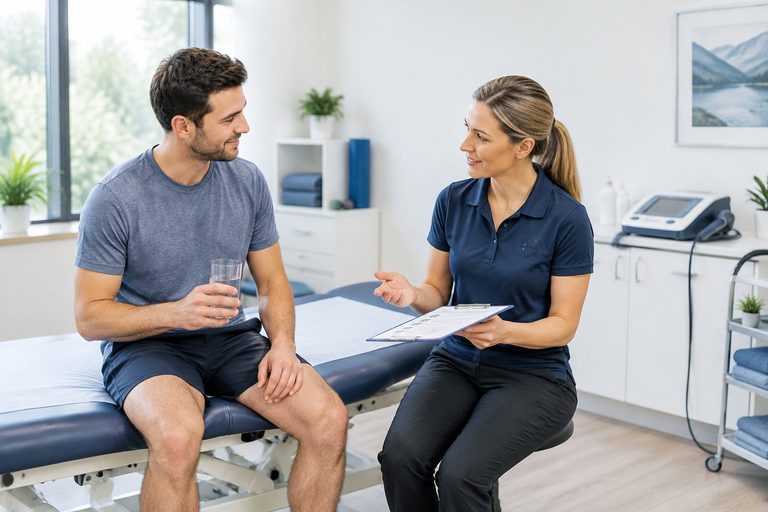
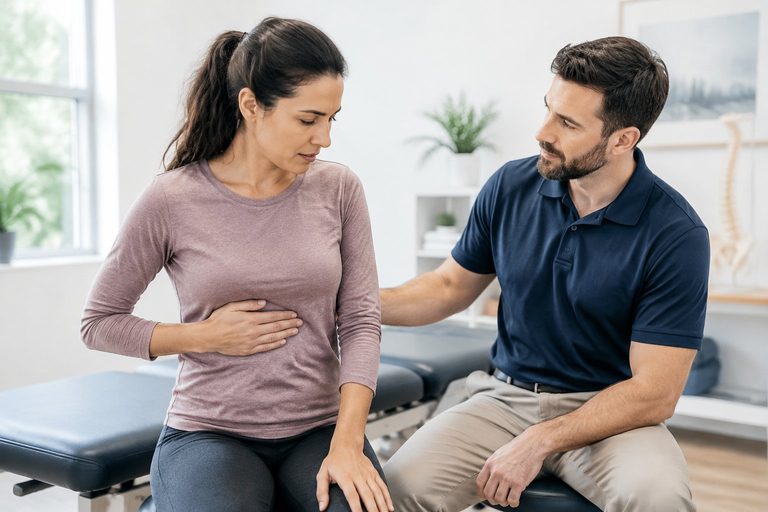
Your first appointment starts with a conversation about your training habits, your pain pattern, and where your body feels tight or restricted. This assessment guides which areas we treat and how we structure the session.
A practitioner will typically ask about your recent activity, any injuries, and where you feel the most tension before placing a single cup. That information determines cup placement, since cupping done on the wrong area will not address the muscle actually causing your discomfort.
Assessment and Choosing the Treatment Area
Choosing the treatment area starts with identifying where your soreness or restriction actually lives, not just where it hurts most. Your practitioner determines the most useful cup placement based on your specific training pattern and where tightness has built up.
For a runner with tight calves, that might mean treating the entire lower leg rather than just the sorest point. For someone with upper back tension from desk work, cups may be placed across the trapezius and along the shoulder blade.
What the Cups Feel Like During Treatment
Cups feel like a firm pulling or tugging sensation, similar to a strong pinch that gradually eases as the tissue adjusts. Most people describe it as tolerable and even relaxing after the first minute, especially compared with deep-pressure massage in the same spot.
Depending on the technique, the cups may stay still or move slowly across the muscle in a gliding motion. Sessions typically run between ten and twenty minutes per area, and most patients feel looser immediately afterward.
Why Circular Skin Marks Can Appear
Circular marks appear because the suction draws blood to the surface of the skin, and the color of the mark often reflects how much tension was in that tissue. These marks are a normal response to the suction, not a sign of injury or bruising in the harmful sense.
Marks usually fade within a few days to about a week, depending on your skin and how much tension was present in that area. This is a normal, expected part of the process, and it is worth understanding before you decide whether cupping fits your recovery routine.
Benefits, Limits, and Safety Considerations
Cupping offers real support for muscle recovery, but it works best as one part of a broader plan rather than a stand-alone fix. Knowing what it can and cannot do helps you set realistic expectations.
The same systematic review referenced earlier found low-to-moderate quality evidence that cupping can help reduce pain and increase blood supply to treated muscle tissue, with a low incidence of adverse effects. That said, cupping is not a substitute for addressing joint dysfunction, nerve irritation, or structural injury, and the overall evidence base is still developing rather than settled.
What Research and Clinical Experience Can Support
Research and clinical use both point to cupping helping with localized muscle stiffness, tension, and short-term soreness. Clinics across Denver report it easing symptoms tied to several musculoskeletal conditions, in addition to its use in sports recovery.
Reasonable expectations for cupping include:
- Reduced muscle tightness in a specific area within one to two sessions
- Improved short-term range of motion around a treated joint
- Less heaviness or soreness in overworked muscle groups
Who Should Avoid or Delay Treatment
Certain people should avoid or delay cupping, including anyone with a bleeding disorder, an open wound, an active skin infection, or who is pregnant without medical clearance. Cupping over recently injured tissue can also aggravate an underlying problem instead of helping it.
Adverse effects tied to cupping are generally mild, though a thorough evaluation before treatment reduces the risk of inappropriate use. A proper intake conversation before your first session helps keep cupping appropriate for your specific situation.
A Smarter Recovery Plan for Your Body
A smarter recovery plan treats cupping as one tool among several, not the entire solution to chronic tightness or soreness. Muscles, fascia, and joints all influence each other, and lasting relief usually comes from addressing more than one layer at a time.
If your tightness keeps returning to the same shoulder or your hip never fully loosens up despite regular cupping, that pattern often points to a joint restriction feeding the problem. A chiropractic adjustment can restore motion at the joint level, which takes pressure off the surrounding muscle and fascia that cupping alone cannot fully release.
This is why combined plans tend to hold up better over time. Cupping decompresses the tight tissue, an adjustment corrects the joint mechanics driving the tightness, and a home mobility routine keeps both gains in place between visits.
Your body rarely has just one thing going on when soreness sticks around for weeks. Metro Acute Chiropractic builds every recovery plan around finding that full picture first, then combining cupping, adjustments, and mobility work in whatever mix your body actually needs. Visit our homepage to learn more about our whole-body approach and find out what personalized care can do for you.
Frequently Asked Questions
Is Cupping Therapy Good for Muscle Recovery?
Cupping can support muscle recovery by increasing blood flow and loosening tight fascia around sore or overworked muscles. It works best for tightness, soreness, and restricted movement rather than for structural injuries like tears or fractures.
How Long Do Cupping Marks Last After a Session?
Cupping marks usually fade within a few days to about a week, depending on how much tension was in the treated area. Darker marks often reflect areas with more built-up tightness, and they are not the same as an injury bruise.
Does Cupping Therapy Hurt?
Cupping feels like a strong pulling or pinching sensation that most people find tolerable within the first minute. It is generally less intense than deep-pressure massage over the same muscle group, though sensitivity varies by person and area treated.
How Much Does Cupping Therapy Usually Cost in Denver?
Cupping pricing in Denver varies by clinic and whether it is bundled with a chiropractic or massage session, and providers don’t publicly standardize rates. Asking about pricing during your evaluation call is the most reliable way to get an accurate number for your specific plan.
Can I Work Out After Cupping Therapy?
Light movement is usually fine after cupping, but intense training on the same treated muscle group the same day is not recommended. Giving the tissue a day to settle helps you get the full benefit of the increased circulation and decompression.
Will Insurance Pay for Cupping Therapy?
Insurance coverage for cupping varies widely, and many plans treat it as an out-of-pocket wellness service rather than a covered medical treatment. Check directly with your insurance provider and the clinic before your visit for the clearest answer for your specific plan.
If persistent tightness or restricted movement has been slowing you down, a personalized evaluation can identify exactly what your body needs. Reach out to Metro Acute Chiropractic and let’s figure out the root cause together.