Every hike starts the same way lately. The first quarter mile feels fine, then that deep ache along the side of your hip starts to nag. By the time you hit the hills, you are favoring one leg, and the drive home means sitting sideways to keep pressure off that outer hip. Sleep isn’t much better, since lying on that side wakes you up more than once a night.
If this pattern sounds familiar, you are dealing with something more specific than “getting older” or “overdoing it.” Chronic hip pain in active adults usually traces back to an irritated tendon, an inflamed bursa, or a joint that is pinching during certain movements. A whole-body evaluation looks at how your hip, pelvis, and walking or running mechanics work together, instead of just chasing the sore spot.
In this guide, you’ll discover how acoustic shockwave therapy for hip pain works, which hip conditions respond best, and how it compares to a cortisone shot. Here is something worth hearing before your first visit: the goal is never just to numb the ache; it is to find out why your body stopped healing on its own.
What StemWave Does in an Irritated Hip Tendon or Bursa
StemWave uses focused acoustic pressure waves, delivered through the skin, to jolt stalled tissue back into an active healing state. It is aimed directly at the gluteal tendons or bursa causing your outer hip pain, not just the surface where you feel it.
The device sends mechanical pulses into the tissue, which the body reads as a signal to increase local blood flow and repair activity. A 2025 narrative review of shockwave therapy for lateral hip conditions found this process, called mechanotransduction, produced a 68.3% improvement in pain scores compared to control groups across the studies reviewed. For a hip that has been sore for months, that signal can be the difference between staying stuck and finally making progress.
How Acoustic Waves Support Blood Flow and Tissue Repair
Chronic tendon pain often comes from poor blood supply, not ongoing inflammation. The same review found that acoustic waves stimulate new blood vessel formation and cellular signaling, supporting better healing over a course of sessions.
For gluteal tendinopathy, that means more oxygen and nutrients reaching a tendon that has been running on empty. Patients often describe less sharp pain when lying on the affected side within a few weeks of starting treatment.
Why Chronic Hip Pain Can Get Stuck in a Healing Cycle
A tendon or bursa injury normally heals within weeks. When pain lingers for months, the tissue has often stalled in an incomplete repair state, still irritated but no longer actively healing.
Rest alone will not restart that process once it has stalled. This is why patients who stretch, ice, and take anti-inflammatories for months still wake up with the same outer hip ache.
StemWave vs. TENS, Therapeutic Ultrasound, and Massage
Patients frequently confuse StemWave with other tools they have tried before. Here is how they differ:
- TENS units block pain signals with electrical stimulation but do not change the tissue itself.
- Therapeutic ultrasound uses sound waves for gentle heating and superficial circulation, with less mechanical force.
- Massage relaxes surrounding muscle and improves comfort but does not reach deep tendon or bursa tissue with the same intensity.
- StemWave delivers targeted mechanical energy deep enough to reach the gluteal tendons and trochanteric bursa directly.
Knowing which tool matches your specific hip pattern is the next step, and that starts with figuring out exactly what is irritated.
Is It Hip Bursitis, Gluteal Tendinopathy, or Joint Impingement?
Where your hip pain shows up, and what makes it worse, points to which structure is involved. Getting this right changes which treatment plan actually helps.
Many patients are told they have “hip bursitis,” but current research shows most chronic cases are actually gluteal tendinopathy, a condition affecting the tendons that attach at the outside of the hip, now grouped under greater trochanteric pain syndrome. That distinction matters because tendon-focused treatment works differently than bursa-focused rest.
Outer-Hip Pain That Worsens When Lying on Your Side
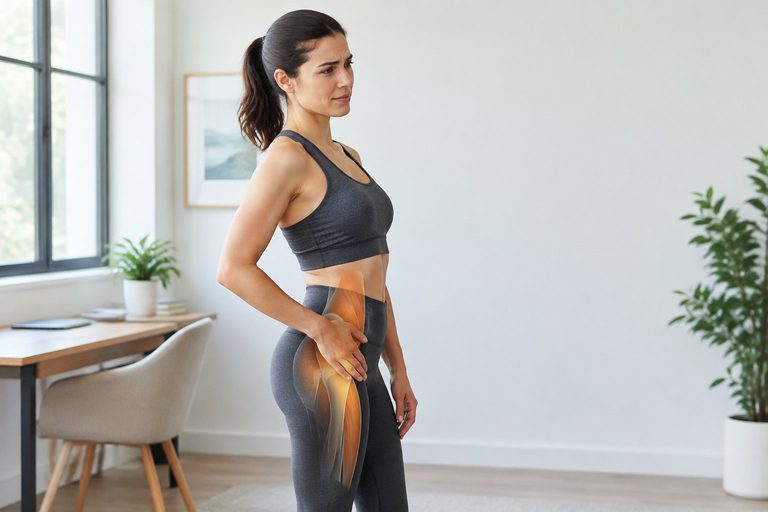
Pain centered over the bony bump on the outside of your hip, worse when lying on that side at night, points to greater trochanteric pain syndrome. This area involves the gluteus medius and minimus tendons attaching in a tight space, sometimes called the “rotator cuff of the hip” because it’s prone to the same kind of degeneration seen in shoulder rotator cuff tendons.
Sitting with legs crossed or standing with weight shifted onto one hip often makes this pain worse too. It tends to build gradually rather than starting from a single injury.
Buttock and Lateral Hip Pain During Running, Hills, or Stairs
Pain in the buttock or outer hip that flares specifically during running, climbing hills, or taking stairs suggests gluteal tendinopathy under load. The tendon is being asked to do more work than it can currently tolerate.
Hikers notice this most on the uphill push, where the glute muscles work hardest to stabilize the pelvis. This pattern responds well to a combination of load management and StemWave therapy aimed at the irritated tendon.
Front-of-Hip Pinching With Deep Bending or Squatting
A pinching sensation in the front of the hip or groin during deep squats, getting out of a low chair, or tying your shoes suggests joint impingement. This is a different mechanical problem than tendon irritation on the outside of the hip.
Impingement involves the bone and cartilage structure of the joint itself, not just soft tissue. It often needs a different combination of mobility work and joint-focused care.
When Hip Pain Needs Imaging or Medical Evaluation First
Some symptoms mean you should see a physician before starting any hands-on treatment:
- Hip pain following a fall or direct trauma
- Inability to bear weight on the leg
- Fever or signs of infection near the joint
- Sudden, severe pain with visible swelling or deformity
If none of those apply to you, understanding your specific pain pattern sets up the next question: what does an actual treatment plan look like once the tissue is identified?
What a Typical Treatment Series Looks Like
A shockwave treatment plan starts with pinpointing the exact tissue causing your pain, not guessing based on where it hurts. That first assessment shapes everything that follows.
The First Visit: Finding the Tissue Behind the Pain
Your first visit includes a hands-on exam to locate the specific tendon, bursa, or joint structure driving your symptoms. This includes testing movements like side-lying leg lift, single-leg stance, or deep squat to see which one reproduces your pain.
Palpation over the greater trochanter, front hip crease, or deep buttock helps narrow down the diagnosis further. This step is what separates a real plan from a one-size-fits-all approach.
What Happens During a Shockwave Session
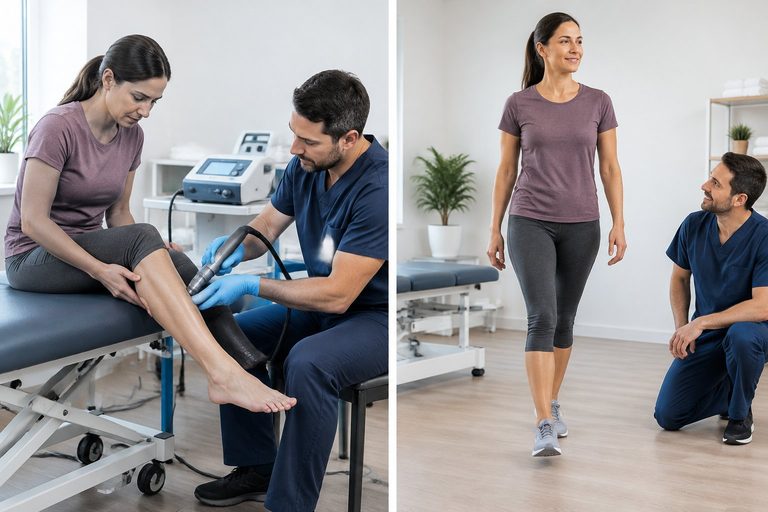
A gel is applied to the skin, and a handheld device delivers acoustic pulses directly over the irritated tendon or bursa. Most sessions run short, and patients describe the sensation as a rapid tapping or mild pressure rather than sharp pain.
No needle, no incision, and typically no significant downtime after a session. Many patients walk out and resume normal daily activity right away.
How Many Visits Might You Need Before Noticing Change
Most shockwave protocols involve three to six sessions, spaced about a week apart, to give tissue time to respond between treatments. Some patients notice less pain after the first session, but the larger shift in tissue healing builds over several weeks.
Results vary based on how long the tendon or bursa has been irritated and how much load it has been under. A hip pain pattern that has lasted two years will likely need more patience than one that started two months ago.
Why Strengthening and Movement Correction Matter After Treatment
Shockwave therapy restarts the healing process, but strengthening keeps the tendon from getting overloaded again. Gluteal tendinopathy in particular responds to progressive loading exercises that rebuild the tendon’s capacity to handle hills, stairs, and long hikes, often guided through physiotherapy.
Movement correction addresses the mechanical habits, like a dropped hip during walking, that put excess strain on the tendon in the first place. Combining shockwave with a strengthening plan gives the tissue both the repair signal and the durability to hold up.
Shockwave Therapy vs. Cortisone Injections for Hip Pain
Shockwave therapy and cortisone injections address different problems, and choosing the right one saves time. Neither is automatically the better choice for every hip.
Different Approaches to Pain Relief and Tissue Recovery
Cortisone injections reduce inflammation quickly, which is why they are often used for acute flare-ups. Shockwave therapy works more slowly, stimulating the tendon or bursa to repair itself rather than simply calming surface inflammation.
For gluteal tendinopathy, this distinction is significant. A landmark 2018 randomized trial published in BMJ found that an education-plus-exercise program led to greater pain relief and better overall improvement at both 8 and 52 weeks than a single corticosteroid injection or a wait-and-see approach. Shockwave fits well as an added tool alongside that kind of exercise-based plan.
Downtime, Side Effects, and Realistic Expectations
Cortisone injections carry a small risk of tendon weakening with repeated use, along with a temporary flare in pain right after the shot. Shockwave therapy carries a much lower risk profile, with mild soreness at the treatment site being the most common side effect.
Neither treatment reverses joint damage from arthritis or fixes a structural impingement issue on its own. Both work best as part of a broader plan that includes movement correction.
When an Injection, Specialist Referral, or Another Option May Be Needed
Some situations call for a cortisone injection or a specialist referral instead of, or alongside, shockwave therapy:
- Severe pain that limits walking or sleep almost every night
- Suspected labral tear or advanced joint impingement needing imaging
- Hip pain with signs of nerve involvement, like numbness down the leg
- No improvement after a full shockwave series combined with strengthening
Weighing these options against what your specific hip needs is easier with a hands-on evaluation, which is exactly where a less invasive path forward starts.
A Less Invasive Next Step for Stubborn Hip Pain
Acoustic shockwave therapy gives hikers, runners, and active adults a way to address stalled hip tendon or bursa pain without surgery or repeated injections. No incision, minimal downtime, and treatment aimed at the tissue itself rather than masking discomfort, so you can keep training through recovery instead of working around it.
Shockwave therapy doesn’t guarantee relief for every type of hip pain, and advanced joint damage or a labral tear may need a different path. But for tendon- and bursa-driven pain, pairing shockwave sessions with a strengthening and mechanics-focused plan gives your hip a real shot at finishing the healing it never completed. Schedule your visit with Metro Acute Chiropractic and find out what’s actually behind your hip pain.
Frequently Asked Questions
Does acoustic shockwave therapy work for hip bursitis?
Shockwave therapy can help with pain often labeled as hip bursitis, though most chronic cases are actually gluteal tendinopathy rather than true bursa inflammation. Treatment aimed at the gluteal tendons, combined with strengthening, tends to produce better long-term results than rest alone.
Can shockwave therapy help gluteal tendinopathy?
Shockwave therapy is commonly used for gluteal tendinopathy, delivering acoustic energy directly into the degenerated tendon tissue to stimulate repair. It works best as part of a structured plan that includes progressive strengthening exercises, not as a standalone fix.
Is shockwave therapy better than a cortisone injection for hip pain?
Neither option is universally better, since they work through different mechanisms. Cortisone reduces inflammation fast for acute flare-ups, while shockwave therapy supports longer-term tissue repair, which research on gluteal tendinopathy suggests can outperform injections when paired with exercise.
Does shockwave therapy for hip pain hurt?
Most patients describe the sensation as a rapid tapping or mild pressure rather than sharp pain. Some soreness at the treatment site for a day or two afterward is common, but it is generally mild and short-lived.
Can shockwave therapy cause damage to the hip?
Shockwave therapy has a strong safety record when a trained provider performs it, and minor soreness is the most commonly reported side effect. It is not appropriate for use directly over active infections, certain blood clotting disorders, or during pregnancy.
Who should not receive shockwave therapy for hip pain?
Patients with active infections near the hip, certain bleeding disorders, or who are pregnant should avoid shockwave therapy until cleared by a physician. Anyone with a suspected fracture, tumor, or severe unexplained hip pain should get imaging or a medical evaluation before starting any hands-on treatment.
If your hip pain has been slowing down your hikes and nothing seems to fully fix it, call Metro Acute Chiropractic and let’s find out exactly what tissue is behind your pain and build a plan around it.