Shoulder impingement is pain that happens when the rotator cuff tendons and a small fluid sac called the bursa get pinched beneath the bony tip of the shoulder as you raise your arm. It is one of the most common causes of shoulder pain in adults, especially people who do a lot of overhead work at the gym, on the court or on the job.
Most cases respond well to conservative care, and research reviews show exercise-based rehab helps many people about as much as surgery over the long term. Once you understand which movements set off your pain and why, you can start making changes that give the tendon room to calm down and get stronger.
What Does Shoulder Impingement Feel Like?
The hallmark is the painful arc. You feel little or nothing with your arm at your side, then a sharp ache as you lift it out sideways between roughly 60 and 120 degrees, around shoulder height. Once the arm passes that zone, the pain often eases. To check yourself, stand facing a mirror and slowly raise your arm out to the side with your thumb pointing up. Pain that switches on partway and fades near the top fits the impingement pattern, while pain all the way up, or an arm that simply will not rise, points to something else.
Other common signs include pain at the front or outside of the shoulder that can spread down the upper arm, trouble reaching behind your back to tuck in a shirt or grab a seat belt, night pain when you roll onto the sore side, and weakness lifting a grocery bag to a high shelf.
Why Does It Happen?
A Tight Space Gets Tighter
The rotator cuff is four small muscles that keep the ball of the shoulder centered in its socket. Their tendons pass through a narrow gap beneath the bony roof of the shoulder, cushioned by the bursa. When the cuff is tired or weak, the ball rides up a few millimeters as you lift, the gap narrows and the tendons get squeezed. The supraspinatus tendon at the top takes the most stress. Bone spurs or a hooked shape to the bony roof can crowd the space further over time.
Overhead Activity
Swimming, tennis, pickleball, volleyball and overhead pressing all put the arm overhead hundreds of times a session, as do jobs like painting, drywall and construction.
The Desk Factor
Rounded shoulders and a stiff upper back tip the shoulder blade forward, which lowers the roof over your tendons. Many of the patients we see from the Denver Tech Center have both problems: a long week at a desk followed by weekend pickleball or a heavy overhead press.
How Is It Diagnosed?
A hands-on exam is usually enough. We check the painful arc, use specific tests that gently compress the tendons, assess rotator cuff strength, watch how your shoulder blade moves and screen the neck, since neck problems can refer pain into the shoulder. Imaging is saved for suspected tears, pain after an injury or symptoms that do not improve with good care.
Telling It Apart From Similar Problems
- Rotator cuff tear: true weakness, often after a fall or past age 40, even when pain is controlled.
- Frozen shoulder: the arm will not move fully even when someone lifts it for you. Our page on frozen shoulder treatment covers this.
- Calcific tendinitis: calcium deposits in the tendon, often with sudden intense pain, confirmed on X-ray or ultrasound.
Treatment That Gives the Tendon Room
Calm It Down
Cut back on whatever spikes the pain, such as pausing overhead presses or using a step stool for high cabinets, but keep moving the arm through pain-free ranges so it does not stiffen. Ice wrapped in a towel can help during a flare.
Restore Movement in the Upper Back and Shoulder Blade
Chiropractic care improves motion in a stiff upper back and rib cage, which lets the shoulder blade tilt back and give the tendons more room. Massage, myofascial release and acupuncture ease tight muscles around the chest, neck and shoulder blade, and kinesio taping can cue better shoulder blade position while you rebuild strength.
Rebuild the Rotator Cuff
Start with gentle mobility such as pendulum swings and a modified doorway stretch with elbows kept below shoulder height. Move on to shoulder blade squeezes and band rows, then side-lying external rotation and band rotations, adding resistance as each set gets easy. Mild discomfort up to about 3 out of 10 that settles within a day is acceptable. Our physiotherapy program progresses this in stages.
When the Tendon Has Stalled
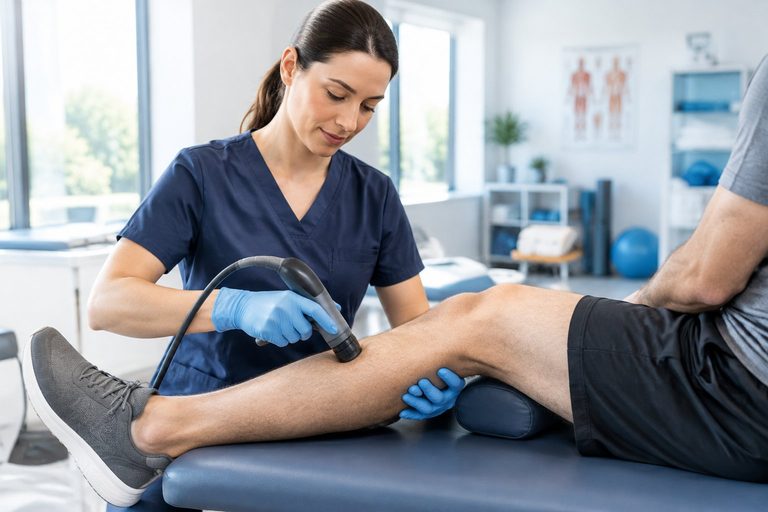
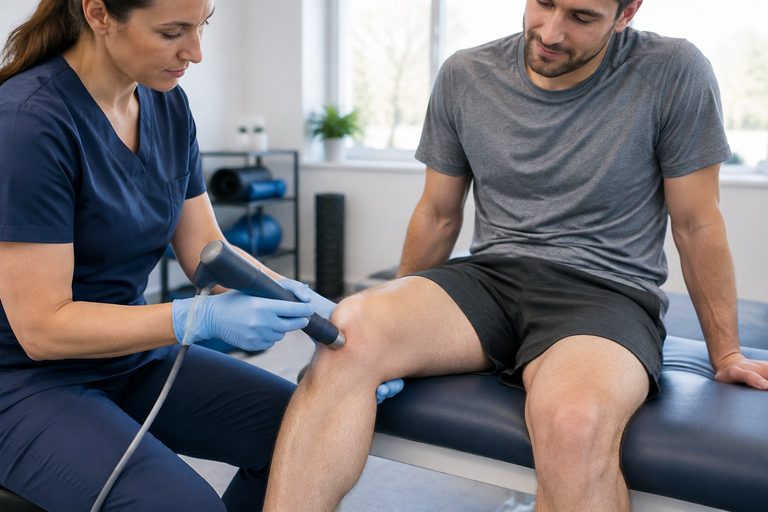
When impingement has gone on for months, the tendon itself often changes and stops healing well. That is where StemWave focused shockwave can help restart repair. You can read more on our StemWave therapy in Lone Tree page.
Wincing every time you reach for the top shelf? Your shoulder blade, upper back and rotator cuff need to work as a team, and Dr. Jacob Alvis will find where the tendon is getting squeezed and guide you back to pain-free reaching, lifting and swinging. Call (303) 221-3342 or request an appointment online.
When to Get Help
Get your shoulder checked if pain lasts more than two or three weeks, wakes you most nights or stops you working, training or sleeping on that side. Go to the emergency room for shoulder or arm pain with chest pressure, shortness of breath or jaw pain. Seek urgent care for a shoulder that looks deformed after a fall, sudden inability to lift the arm after an injury, or fever with a hot swollen joint.
Your shoulder should be able to handle a pickleball match, a heavy grocery bag and a good night’s sleep, and we would love to help you get there. Metro Acute Chiropractic has treated shoulders like yours in Lone Tree for more than 16 years, and Dr. Alvis will show you where yours is getting pinched and what it will take to free it up. Call (303) 221-3342 or request an appointment online.
Frequently Asked Questions
How long does shoulder impingement take to recover?
Commonly six to twelve weeks with consistent rehab. Recent cases may settle in a few weeks, while long-standing ones with tendon changes can take three to six months.
What exercises should I avoid?
While it hurts, avoid behind-the-neck presses, upright rows, wide-grip pull-downs and heavy bench press or dips. You can usually reintroduce them gradually once you can lift your arm through the full range without pain.
How should I sleep with shoulder impingement?
Sleep on your back or your pain-free side, hugging a pillow so the sore arm rests forward and supported. Avoid sleeping with your arm above your head.