Most mild lower back strains feel much better within one to two weeks and heal within about four, while moderate tears can take six to twelve weeks. The first few days hurt the most. After that, steady movement and smart choices shape your lower back muscle strain recovery time.
Maybe it was the first big snow shovel of the season, a heavy bag of mulch or one deadlift too many. Whatever the cause, a pulled back muscle can turn getting out of a chair into a project. Most of these strains improve on their own, and you can do a lot to help them along. The tricky part is knowing what normal healing looks like each week, so you can tell when you are on track and when something needs a closer look.
The Week-by-Week Timeline
Days 1 to 7
The first 48 to 72 hours are the roughest. Your back feels tight and achy, and moves like tying your shoes or rolling over in bed bring a sharp catch. That muscle spasm is your body guarding the injured area. By days four to seven, most people can stand straighter, walk farther and sit a bit longer. Mornings often feel worst, and a warm shower plus a short walk helps loosen things up.
Weeks 2 to 4
A mild strain overstretches fibers without much tearing, so by now you should be back to driving, desk work and light chores, with some twinges on bending or twisting. This is the window to add gentle core and hip work. Many people feel “fine” by week three and jump straight back into heavy lifting, which is one of the most common reasons we see repeat strains.
Weeks 4 to 12
A moderate strain involves more torn fibers, more spasm and sometimes bruising, and takes six to twelve weeks to rebuild full strength. Most acute back pain resolves within twelve weeks; pain lasting longer is considered chronic and deserves a full assessment.
Why Less Pain Is Not the Same as Fully Healed
Pain fades faster than tissue heals. New fibers stay weaker for weeks after the ache is gone, and your back muscles may keep firing in a guarded pattern. That is why testing strength and endurance before returning to hard training matters so much.
Is It a Strain or Something Else?
A strain causes local, achy, movement-related pain in the muscles beside the spine, sometimes spreading into the upper buttock. It usually starts after a specific event like lifting, shoveling or a sudden twist. A sprain, which injures a ligament rather than a muscle, feels similar and responds to similar care.
Pain that shoots below the knee, burns, or comes with numbness, tingling or weakness points toward an irritated nerve, often from a disc. That calls for a different plan, which we cover on our herniated disc treatment page.
What Speeds Recovery, and What Slows It
Walk, Then Walk a Little More
Walking is one of the best things you can do. Start with five to ten minutes a few times a day and build toward 20 to 30 minutes. Movement keeps blood flowing to the muscle and calms the nervous system’s pain response.
Ice Early, Heat Later
Ice for 15 to 20 minutes over a thin cloth can ease the first 48 hours. After that, heat relaxes spasm and stiffness. Our list of back pain remedies has more ideas for the days in between.
Add Strength Gradually
Once sharp pain settles, start pelvic tilts: lie on your back with knees bent, gently flatten your lower back into the floor, hold five seconds and repeat ten times. From week two, add glute bridges, bird dogs and side planks, building slowly. Strong glutes and core take pressure off the healing muscle.
What Holds You Back
Bed rest beyond a day or two weakens muscles and stiffens joints. Heavy lifting too early can re-tear partly healed fibers, and every flare-up resets part of the healing clock.
Ready for Workouts?
You are ready when you can bend, twist and lift light loads with little or no pain and the next morning feels no worse. Try a session at about half your usual effort, and if two or three go well, build up by roughly 10 to 20% a week.
Back still catching when you bend or twist? Healing goes faster when the muscle is guided back to strength. Dr. Jacob Alvis and our Lone Tree team can ease the guarding with gentle hands-on care and set you up with exercises that keep the next lift from undoing your progress. Call (303) 221-3342 or request an appointment online.
When to Get It Checked
Go to the emergency room for loss of bladder or bowel control, numbness in the groin or inner thighs, or sudden severe leg weakness. Seek urgent medical care for back pain with fever, pain after a fall or crash, pain alongside chest or belly pain, or pain that worsens at rest. A history of cancer or unexplained weight loss also calls for prompt medical evaluation.
Have your back checked if your pain has not eased after two weeks, is getting worse, or keeps coming back. Most strains do not need imaging; a hands-on exam of movement, nerves, strength and reflexes is usually enough to guide care.
How Chiropractic Care Helps
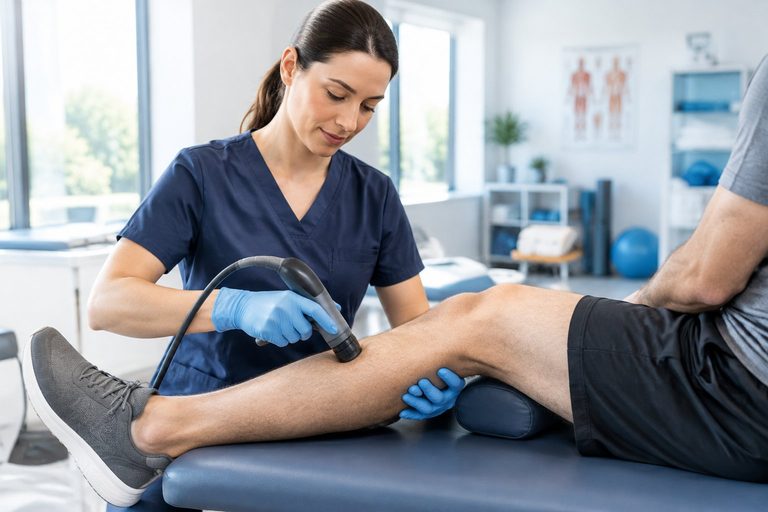
Good care looks at what made your back vulnerable in the first place, such as stiff joints, weak glutes or poor lifting mechanics. At Metro Acute Chiropractic, a plan may combine gentle adjustments, soft tissue work and physiotherapy exercises as part of our back pain care. For strains that keep returning or stall for months, StemWave focused shockwave can help restart repair in the tissue.
A sore back can make every part of the day harder, from the school run to your Saturday workout, and we would love to help you feel like yourself again. Metro Acute Chiropractic has been treating sore backs in Lone Tree for more than 16 years, and Dr. Jacob Alvis can tell you where you are on the healing timeline, what is slowing you down and how to get back to lifting with confidence. Call (303) 221-3342 or request an appointment online.
Frequently Asked Questions
Should I walk with a pulled lower back muscle?
Yes. Walking helps a strain heal faster than resting. Start short and easy and build up as pain allows, stopping if it turns sharp or spreads down your leg.
Can a pulled back muscle hurt on only one side?
Yes, depending on which muscle was injured. One-sided pain that shoots down the leg with numbness or tingling points more toward a nerve and should be checked.
Why does my back still feel stiff after the pain improves?
Healing tissue is less flexible and the muscles may keep guarding out of habit. Gentle stretching, walking and strengthening restore normal motion; stiffness lasting beyond a few weeks deserves an assessment.