Pain between your shoulder blades is most often muscular: strained or overworked upper back muscles from desk posture, heavy lifting or repetitive reaching, sometimes with stiff mid-back joints or pain referred from the neck. Most cases improve with gentle movement, better workstation habits and targeted care that finds what is overloading the area.
It is an awkward spot. You cannot reach it well, you cannot stretch it easily, and it tends to flare by mid-afternoon after hours over a laptop. A small number of cases come from the heart, the aorta or the gallbladder, so it is worth knowing the warning signs before focusing on the common, fixable causes.
First, Know the Warning Signs
Call 911 if pain between the shoulder blades comes with chest pressure, shortness of breath, sweating, nausea, dizziness, or pain in the jaw or arm. These can signal a heart attack, and in women especially, a heart attack can show up as a dull ache between the shoulder blades. A sudden, severe tearing pain in the upper back also needs emergency care.
See a medical doctor promptly if the pain sits under your right shoulder blade and tends to follow fatty meals, since that pattern can point to the gallbladder. Fever with spine pain, new arm weakness, or pain after a crash or fall also need a medical check first.
What Commonly Causes It?
Muscle Strain From Desks, Lifting and Sport
The rhomboids and the middle and lower trapezius hold your shoulder blades back and down. Lifting a heavy box with rounded shoulders, swinging a golf club or leaning toward a screen for eight hours makes them work overtime. The result is a deep ache or a sharp pinch when you reach or twist. Many Denver Tech Center office workers feel it build over weeks of forward-head posture, a pattern closely linked to text neck.
Trigger Points
Trigger points are tight, tender knots inside a muscle. Pressing one causes pain right there plus an ache that spreads. When they linger, the whole upper back can feel tight and heavy.
Stiff Mid-Back and Rib Joints
Your mid-back connects to your ribs through small joints on each side. A cough, a twist or an awkward sleep position can leave one stiff and irritated, causing a sharp, catching pain beside the shoulder blade that may worsen with a deep breath.
Pain Referred From the Neck
Irritated joints or discs in the neck often send pain down between the shoulder blades. If you also notice tingling or numbness in the arm or hand, a nerve may be involved and needs a proper exam.
Age-Related Changes
Arthritis in the small spinal joints causes stiffness that is worst in the morning and eases with movement. Scoliosis can load one side more than the other. In people with osteoporosis, sudden sharp mid-back pain after a minor bump deserves imaging to rule out a compression fracture.
What You Can Safely Try at Home
Keep Moving
Bed rest tends to make upper back pain stiffer. Keep walking and moving through comfortable ranges, carry bags close to your body, and use a warm shower or heating pad for 15 to 20 minutes to loosen tight muscles.
Stretch, Then Strengthen
Start with slow shoulder rolls. For a rhomboid stretch, clasp your hands in front at shoulder height, drop your chin and reach forward to round your upper back, holding for 15 to 30 seconds. Once the pain settles, add shoulder blade squeezes (draw the blades down and together, hold six seconds, repeat 8 to 12 times) and then band rows.
Rework Your Desk and Pillow
Bring the top of your monitor level with your eyes, pull the keyboard close enough that your elbows rest by your sides, and set a reminder to stand and roll your shoulders every 30 to 45 minutes. If you work on a laptop, a stand and a separate keyboard are worth the money, because a laptop flat on the desk pulls your head down and your shoulder blades apart all day. At night, sleep on your back or side with a pillow that keeps your neck level; stomach sleeping twists the upper back for hours.
Can’t reach that ache between your shoulder blades? That is exactly where we can help. Dr. Jacob Alvis and our team will work out whether tight muscles, stiff rib joints or your neck are behind it, then treat the source with hands-on care and simple exercises you can do at your desk. Call (303) 221-3342 or request an appointment online.
How Professional Care Helps
A hands-on exam tells you which tissue is causing the pain so treatment hits the source. We check posture, test how your mid-back and neck move, press along the muscles for trigger points, check rib motion as you breathe and screen nerve function. Anything that suggests a heart, organ or fracture concern gets referred to the right medical provider first.
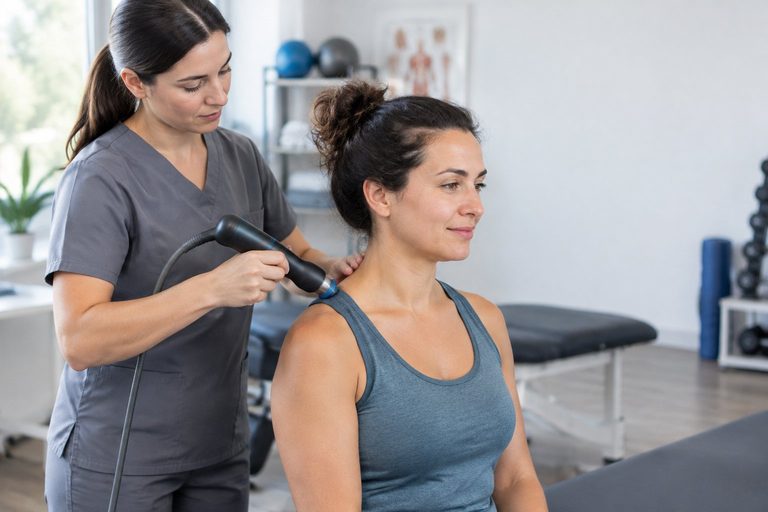
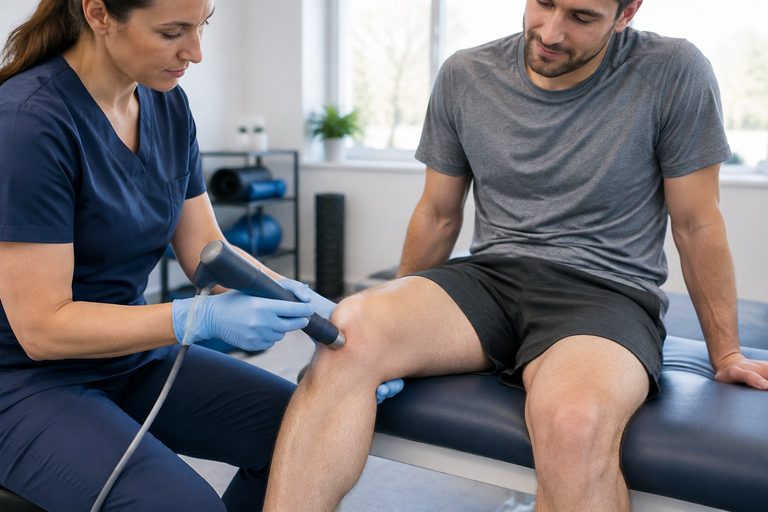
When stiff mid-back or rib joints are part of the problem, gentle chiropractic adjustments restore movement so the surrounding muscles can relax. Massage therapy, myofascial release and acupuncture work on trigger points and tight bands. Rehab exercises for the muscles that hold your shoulder blades keep the pain from coming back, and for a stubborn strain that has stopped healing, StemWave focused shockwave can help restart tissue repair.
Reading the Clues Your Pain Gives You
Most upper back pain is mechanical, and it leaves clues. Pain that eases once you get moving and builds when you sit still points to tired muscles and stiff joints. A sharp catch on a deep breath or a big yawn points to a rib joint. Tingling that reaches the hand points to the neck. Anything that matches the warning signs near the top of this article skips the detective work and goes straight to medical care.
An upper back that aches every afternoon is common, but it is not something you have to live with. Metro Acute Chiropractic has spent more than 16 years helping Lone Tree office workers, lifters and golfers track down the cause of that nagging spot between the shoulder blades, and Dr. Alvis will make sure your plan targets the real source, not just the sore muscle, so you can get back to work, workouts and restful sleep. Call (303) 221-3342 or request an appointment online.
Frequently Asked Questions
Why does the area between my shoulder blades feel like it needs to pop?
That urge usually comes from stiff mid-back or rib joints and tight muscles around them. Popping brings brief relief, but the tightness returns if the cause is not addressed.
What can cause burning pain between the shoulder blades?
Nerve irritation from the neck, an irritated trigger point or acid reflux are common causes. Shingles can also cause one-sided burning followed by a rash. Burning with numbness, arm weakness or a rash should be checked promptly.
How long does a strain between the shoulder blades take to heal?
A mild strain usually improves within one to two weeks with gentle movement and heat. If pain lasts longer, keeps returning or spreads into your arm, an exam can find what is slowing recovery.