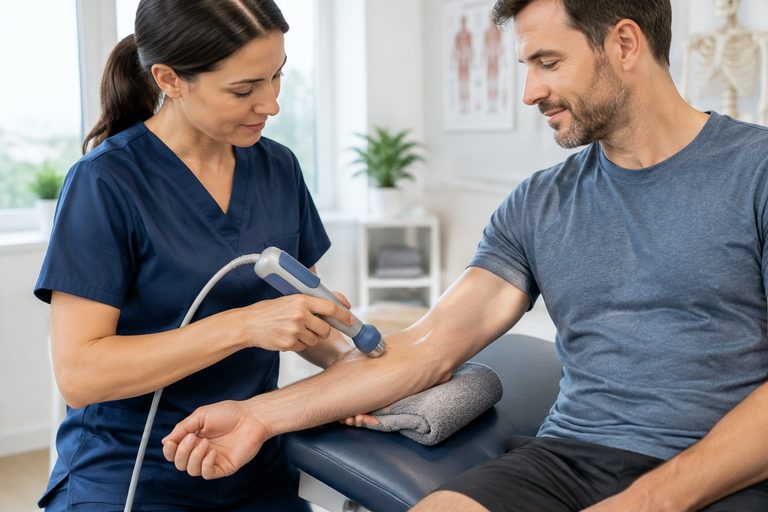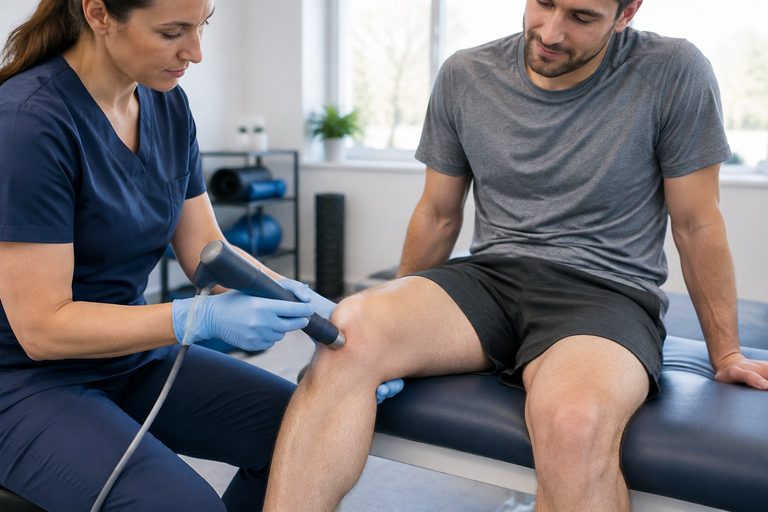
Focused shockwave therapy for a muscle strain that has stopped improving can restart your body’s own repair process in the injured tissue. It works best on strains that are weeks or months old and keep flaring, especially in the hamstring, calf, groin or upper back. Paired with hands-on soft tissue care and gradual strengthening, it helps many patients get back strength and range they had started to think were gone.
Most strains heal on their own within a few weeks. Some never fully settle. The muscle feels fine on an easy jog or a round of golf, then grabs again the moment you sprint, lift heavy or lunge for a ball on the pickleball court. That cycle usually points to tissue that healed with weak, poorly organized fibers and limited blood flow, and rest alone rarely fixes that.
Why Do Some Strains Keep Coming Back?
When a muscle strains, the body lays down new fibers to patch the damage. Those fibers often go down in a messy pattern mixed with stiffer scar tissue. If blood flow to the area stays poor, healing slows and the repaired spot stays weaker than the muscle around it.
Then comes the trap. The muscle feels okay, so you return to full activity before strength is back, and it strains again at the same weak point. Hamstrings are the classic example, and so are calves in runners and groin muscles in skiers, hockey players and lifters. Desk workers and parents carrying kids often have an upper back muscle that never fully lets go.
How Shockwave Helps Restart Repair
Focused shockwave sends short pulses of acoustic energy through the skin into the injured muscle. Cells sense the mechanical pressure and respond with chemical repair signals, a process called mechanotransduction. Local blood flow increases, and over time the body builds new small blood vessels. Better circulation brings oxygen and nutrients to tissue that has been starved of them, and research suggests shockwave also helps recruit and activate the body’s own repair cells and supports collagen production.
The strongest shockwave research comes from tendon problems, and muscle research is newer. Early findings are encouraging, and they line up with what we see in practice: stalled strains often begin to move again once shockwave is added to a proper rehab plan.
Why We Use a Focused Device
Focused shockwave concentrates its energy at a set depth, so it can reach deeper muscle and the junction where muscle meets tendon, where many stubborn strains live. That is why we use StemWave focused shockwave at Metro Acute Chiropractic.
Where Shockwave Fits in Your Recovery
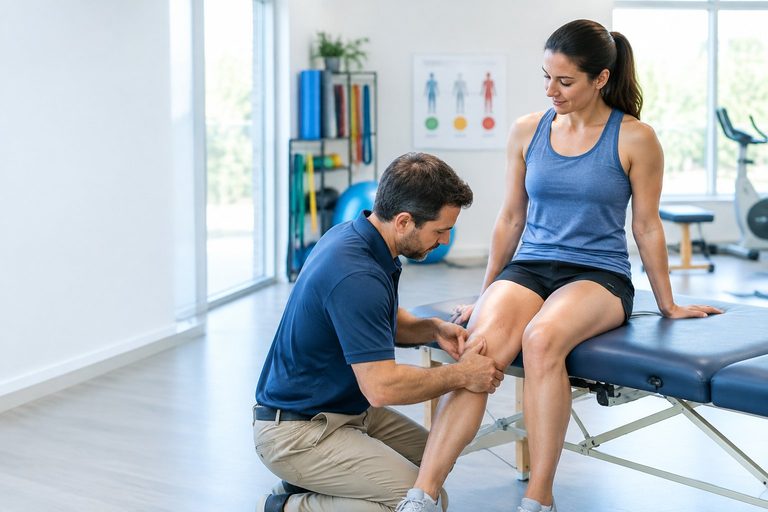
A strain from yesterday could be a small pull, a larger tear or something else entirely, so fresh injuries need protection, gentle movement and a proper exam first. Shockwave is typically brought in once the injury is past the early healing window, or when a strain has lingered for weeks and keeps flaring. It is not used on tissue that is fully torn.
What Treatment and Rehab Look Like
The Session
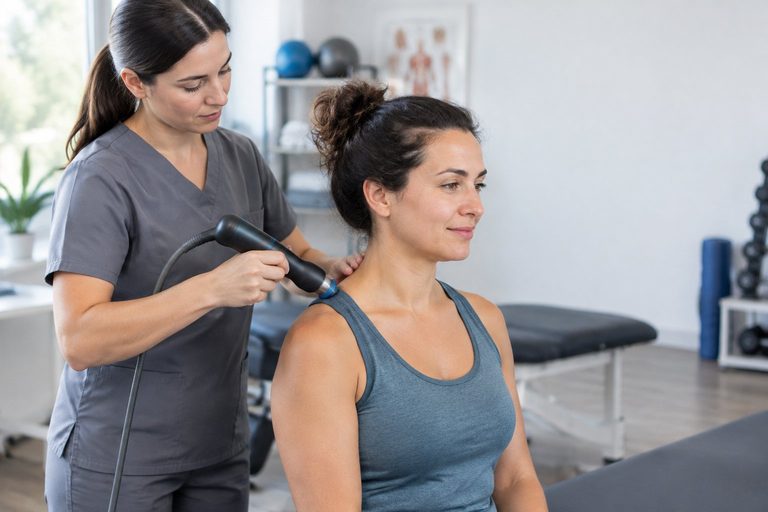
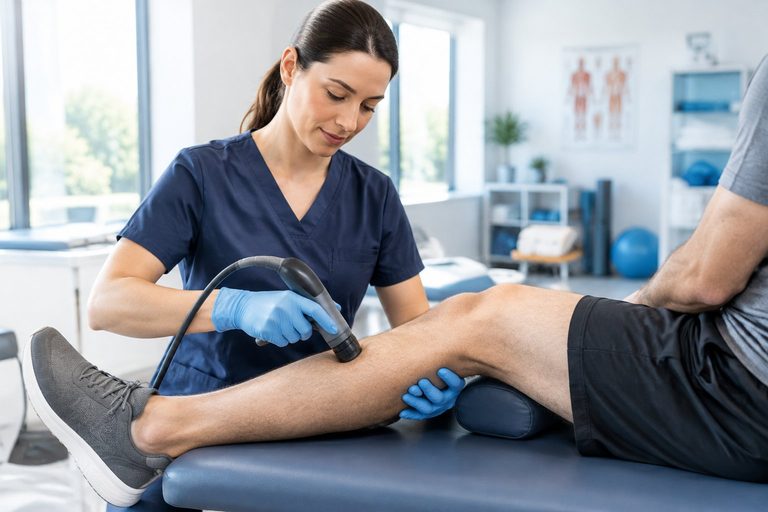
We press around the muscle to find the exact tender spots, apply a little gel, and move the applicator over them. You will feel a firm, rhythmic tapping that is most intense over the sorest point, and we adjust the energy to your feedback. Sessions take less than 10 minutes, and most plans run about three to six sessions spaced a week apart. There is no recovery period afterward, so most people head straight back to work or the rest of their day.
Soft Tissue Care Around It
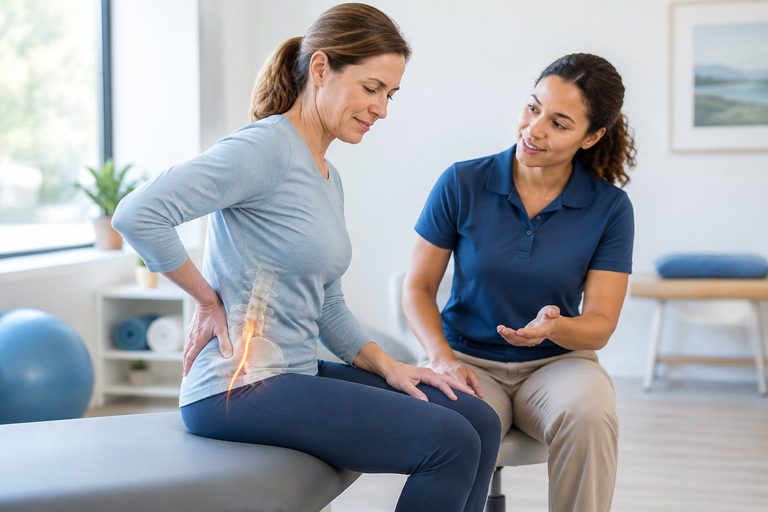
Massage therapy relaxes the guarding muscles nearby so the injured spot is not overloaded. Myofascial release eases tight fascia and draws in blood flow, and acupuncture can help calm stubborn trigger points.
Progressive Strengthening
This is the piece that stops a strain from returning. You move from gentle isometric holds to slow lengthening exercises like Nordic curls or eccentric calf drops, and then to speed and sport-specific drills. Before returning to full games or heavy training, your injured side should come close to matching the healthy side in strength and range of motion.
Has your strain been “almost better” for weeks? Dr. Jacob Alvis can pinpoint where healing has stalled and pair StemWave focused shockwave with soft tissue work and a strength plan built around your sport or daily routine. Call (303) 221-3342 or request an appointment online.
When to See a Professional
Get checked if your muscle pain came with a pop, is severe, or has not improved after two to three weeks. A loud pop followed by a visible dent in the muscle, or an inability to use the limb, can mean a full tear that needs a surgeon’s opinion. A swollen, warm, red calf may signal a blood clot. Chest pain with what feels like an upper back strain needs emergency care.
Shockwave is not used during pregnancy, near tumors or the lungs, or over areas with infection, and blood thinners need careful review. Mild redness, tenderness or light bruising for a day or two afterward is normal.
Pair Targeted Treatment With a Gradual Return
A stalled strain heals best when treatment that wakes up tissue repair is combined with a step-by-step plan that rebuilds strength. Active patients often fold this into our athletic recovery therapy, and you can read more about the treatment itself on our StemWave therapy in Lone Tree page.
You do not have to keep babying the same muscle for another season. For more than 16 years, Metro Acute Chiropractic has helped runners, skiers and weekend athletes around Lone Tree get stubborn strains moving forward again, and Dr. Alvis would be glad to take a look at yours. Call (303) 221-3342 or request an appointment online.
Frequently Asked Questions
Is shockwave therapy painful on a strained muscle?
It feels like firm, fast tapping and is most intense right over the sorest spot. We adjust the energy throughout, so most patients find it very tolerable, and tenderness afterward fades within a day or two.
Does shockwave break up scar tissue?
It helps scar tissue remodel by improving blood flow and signaling cells to build better-organized fibers. Tight bands often soften over several sessions, especially alongside massage and strengthening.
Can shockwave make a strain worse?
The risk is low when you are screened first and treated at the right stage. It is not used on fresh severe tears or ruptured tissue, and pain that keeps worsening beyond 48 hours should be checked.