Hip bursitis causes pain and tenderness on the outer point of the hip, and most cases improve without surgery through better load management, smarter sleep positions and a progressive strengthening plan. The pain often shows up when you lie on that side at night, climb stairs or stand up after a long stretch at your desk or in the car.
The name can be misleading. Many people told they have hip bursitis are actually dealing with irritated gluteal tendons more than an inflamed fluid sac. That difference changes what helps. Rest and ice may calm a flare, but building strength in the tendons around the hip is what keeps the pain from coming back.
What Does Hip Bursitis Feel Like?
Outer Hip Tenderness and Night Pain
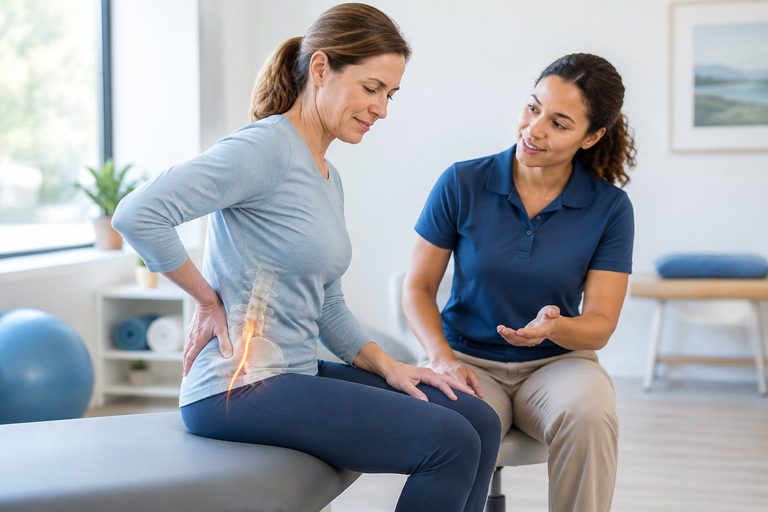
The common form centers on the greater trochanter, the bony bump you can feel on the side of your upper thigh. Pressing on it hurts, and the ache can spread down the side of the thigh toward the knee. Night pain is the complaint we hear most. Lying on the sore side presses the tissue against bone, and lying on the other side lets the top leg drop across your body, which squeezes the same tendons. Many people wake every time they roll over.
Walking, Stairs and Getting Up
Your glutes hold your pelvis level each time you stand on one leg. Walking, climbing stairs and getting out of the car all ask those muscles and tendons to work hard right over the sore spot, which is why the first few steps after sitting feel stiff and painful.
Pain in Other Places
Deep buttock pain that worsens sitting on a hard chair or bike seat points to a different bursa under the sitting bone. Pain in the groin points more toward the hip joint itself and deserves a closer look.
Why Does It Keep Coming Back?
Overuse and Pressure
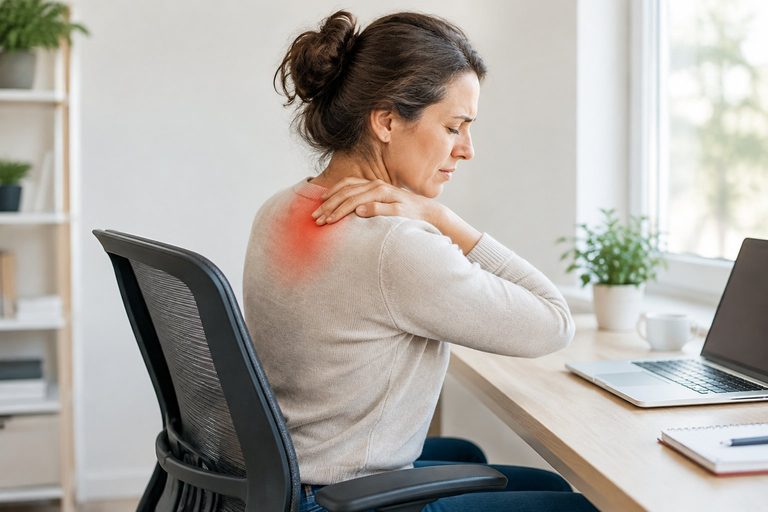
Running, steep hikes, stair workouts and long days on your feet load the outer hip repeatedly, and a sudden jump in mileage or a new hilly route can tip things over. A fall onto the side of the hip, sleeping on a firm mattress on the same side every night, or sitting with legs crossed for hours all add steady compression.
The Tendons Are Usually the Real Driver
Clinicians now often use the term greater trochanteric pain syndrome for this kind of outer hip pain, because imaging and research keep showing that the gluteus medius and minimus tendons are the main source of pain in many people. The bursa may be irritated too, but it is often along for the ride. That explains why treatment aimed only at inflammation tends to give short-term relief: an overloaded tendon needs to be rebuilt.
Movement Habits
Standing with your hip pushed out to one side, crossing your legs and letting your knee cave inward when you walk or squat all squeeze the gluteal tendons against bone. Weak hip muscles, a tight IT band and a leg length difference shift more strain onto the outer hip. It is more common in middle-aged adults and in women, and conditions like rheumatoid arthritis or gout can inflame a bursa directly.
What Helps You Recover Without Surgery?
Ease the Pressure
Cut back on whatever makes the pain flare, such as shorter walks on flat ground or the elevator for a couple of weeks, without stopping movement altogether. At night, try your back with a pillow under your knees, or sleep on the good side with a firm pillow between your knees so the top leg stays level. During the day, stand with weight even on both feet and avoid crossing your legs.
Exercises to Try, and What to Skip
Gentle isometric holds are a good first step: lie on your back with a strap around your knees and press outward into it for 30 to 45 seconds without moving, five times. As pain settles, add glute bridges, side-lying leg raises with the top leg slightly behind you, then step-ups and single-leg balance. Our stretching and strengthening programs help you add load at the right pace.
During a flare, skip stretches that pull the leg across your body, like the figure-four or cross-body IT band stretch. They feel like they should help, but they press the tendons into the bone.
Guided Rehab and Hands-On Care
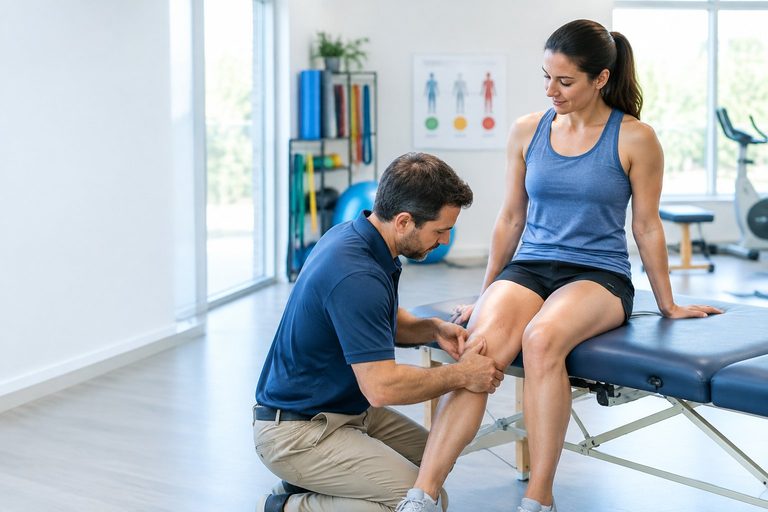
Research on gluteal tendinopathy shows education plus progressive exercise outperforms injections and waiting it out over the long term. Our physiotherapy and rehab programs pair that loading with adjustments to the pelvis and lower back when they affect how your hip moves, plus soft tissue work for tight muscles.
When Shockwave Can Help
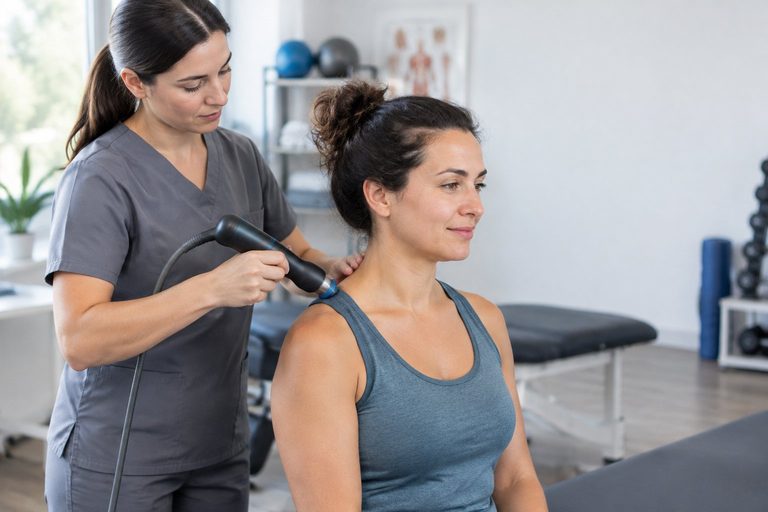
For outer hip pain that has dragged on for months, focused shockwave can help restart healing in the tendon. We cover this in depth in our article on acoustic shockwave therapy for hip pain.
Losing sleep to outer hip pain? Gentle tendon loading and a few changes to how you sleep and stand can make a real difference, and Dr. Jacob Alvis and our team will guide you through every step so you can lie on either side again. Call (303) 221-3342 or request an appointment online.
When to See a Professional
Get your hip checked if pain lasts more than two weeks, changes how you walk or keeps you up at night. Seek urgent medical care for fever with a hot, red, swollen hip, being unable to bear weight, a leg that looks shorter or turned outward after a fall, or severe pain after trauma. An exam also separates bursitis from hip arthritis, IT band problems, a gluteal tendon tear or nerve pain from the lower back.
Anti-inflammatory medication can ease a bad flare, and a steroid injection can give short-term relief, though pain often returns if the tendon is not strengthened. Surgery is rarely needed and usually only considered after months of conservative care without progress.
Build Back to Comfortable Movement
Hip bursitis responds best when you treat the gluteal tendons and the habits that overload them. We would be delighted to help you get back to easy morning walks, weekend hikes and a full night’s sleep without that ache on the side of your hip. Our Lone Tree practice has been caring for south metro hips, backs and knees for more than 16 years, and Dr. Jacob Alvis will build your plan around the activities you want back. Call (303) 221-3342 or request an appointment online.
Frequently Asked Questions
Is walking good for hip bursitis?
Yes, as long as it stays comfortable. Keep walks shorter, stick to flat ground at first and take normal-length strides. If pain is worse the next morning, cut the distance back for a while.
Can hip bursitis go away on its own?
Mild cases can settle in a few weeks, but pain often returns because the weak or overloaded tendons have not been strengthened. A structured plan gives you a better chance of lasting relief.
How long does hip bursitis take to improve?
Many people feel better within four to six weeks of steady care. Long-standing cases tied to tendon changes can take three months or more, since tendons rebuild slowly.